

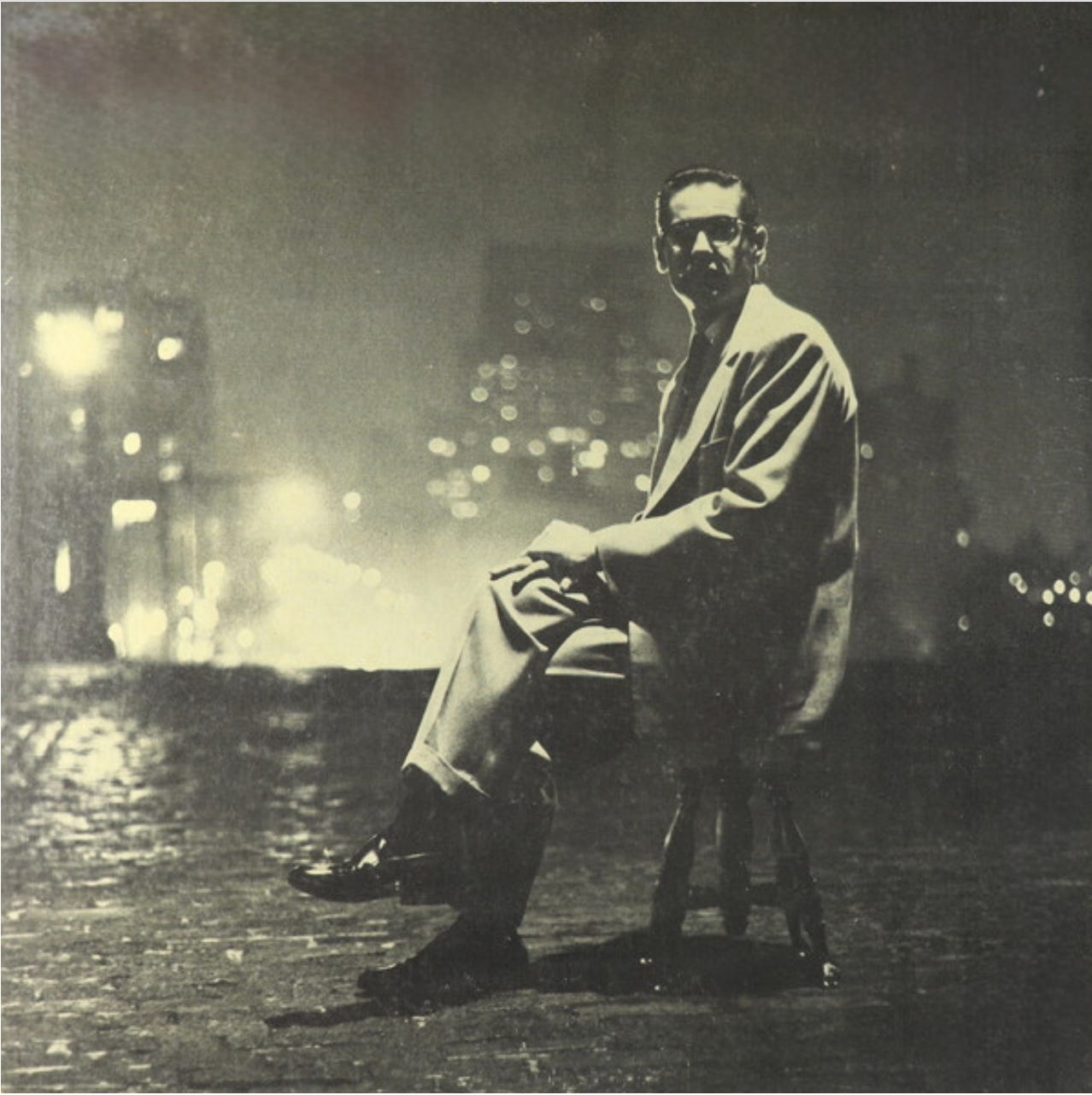
Pianist Bill Evans was discovered by guitarist Mundell Lowe in the late 1940s. They first met when Lowe was discharged from the Army in New Orleans after World War II and Evans was studying at Southeastern Louisiana University. Lowe’s brother-in-law raved about Evans and dragged him off to campus to hear the pianist play. [Photo above of Bill Evans in 1956, for the cover of New Jazz Conceptions, by Henry Parker]
As Lowe told me during a 2008 interview: “I loved Bill’s sound right away. When we met, I told him that when he graduated, he had to come to New York and that we’d gig.” [Photo above of Bill Evans in 1956, on the cover of New Jazz Conceptions by Henry Parker]
Evans accepted Lowe’s offer and came to the city in the early 1950s, gigged with Lowe and recorded as a sideman with bands and ensembles into 1956. Lowe also called Riverside co-founder and producer Orrin Keepnews and told him about Evans. In 1956, Keepnews recorded Evans solo and with bass and drums, and released New Jazz Conceptions in Feb. 1957.
In June of that year, Evans performed with the Gunther Schuller Orchestra at the Brandeis Jazz Festival and was given a solo during the third movement of George Russell’s All About Rosie.
Billed as a Modern Jazz Concert, the festival’s purpose under the leadership of Schuller was to showcase Third Stream jazz, which attempted to fuse jazz and classical.
Schuller had commissioned six original pieces for the festival. Evans’s solo on Russell’s All About Rosie was fresh, fluid and alive, and astonished the musicians and audience.
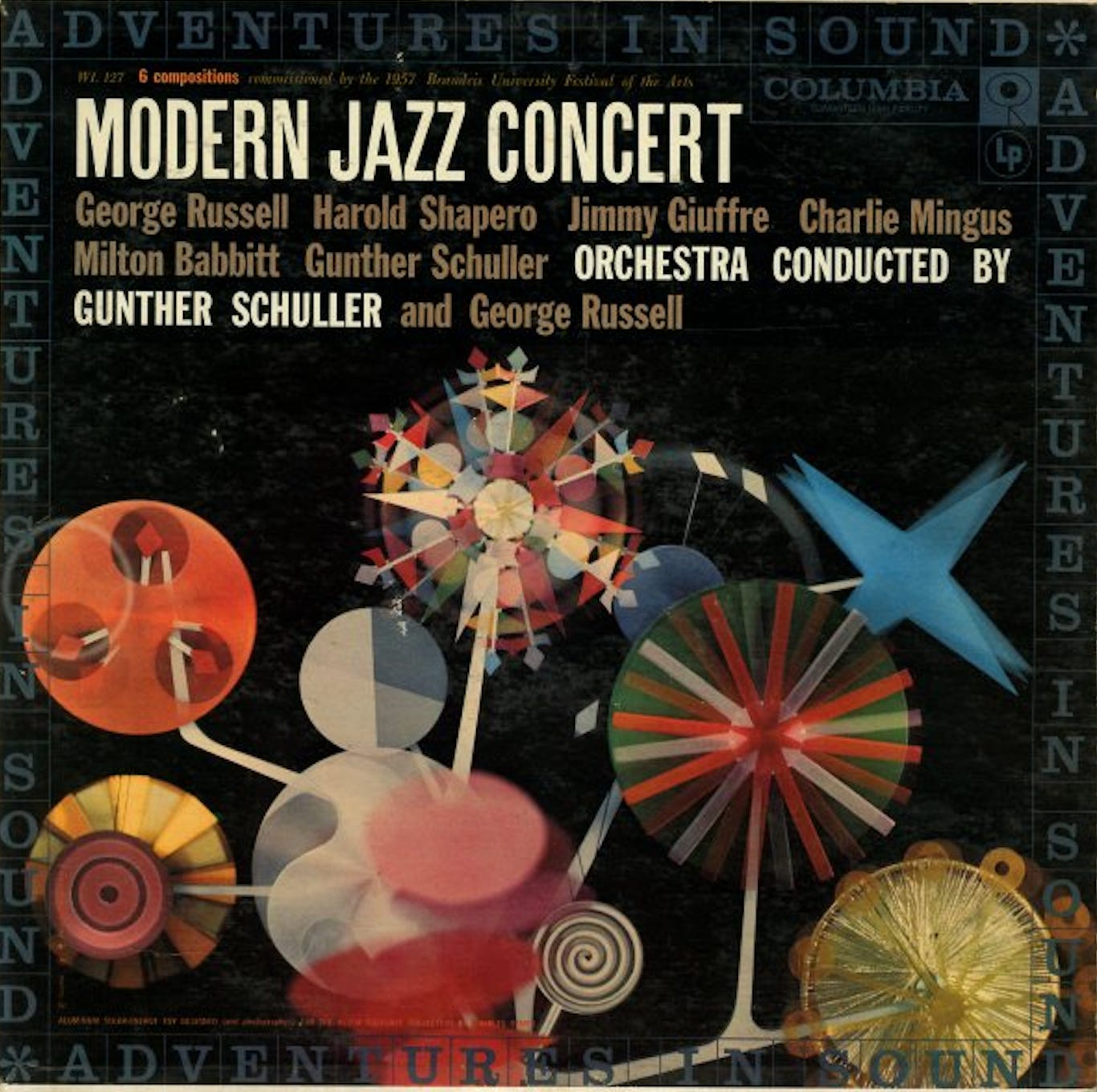
When Columbia recorded the six pieces the following week in New York for an album with most of the same musicians, Evans again played a solo that knocked out listeners. Word of mouth spread quickly among leading jazz artists, and Evans was instantly in play. He recorded prolifically as a sideman over the months that followed until he was hired by Miles Davis for his quintet in the spring of 1958.
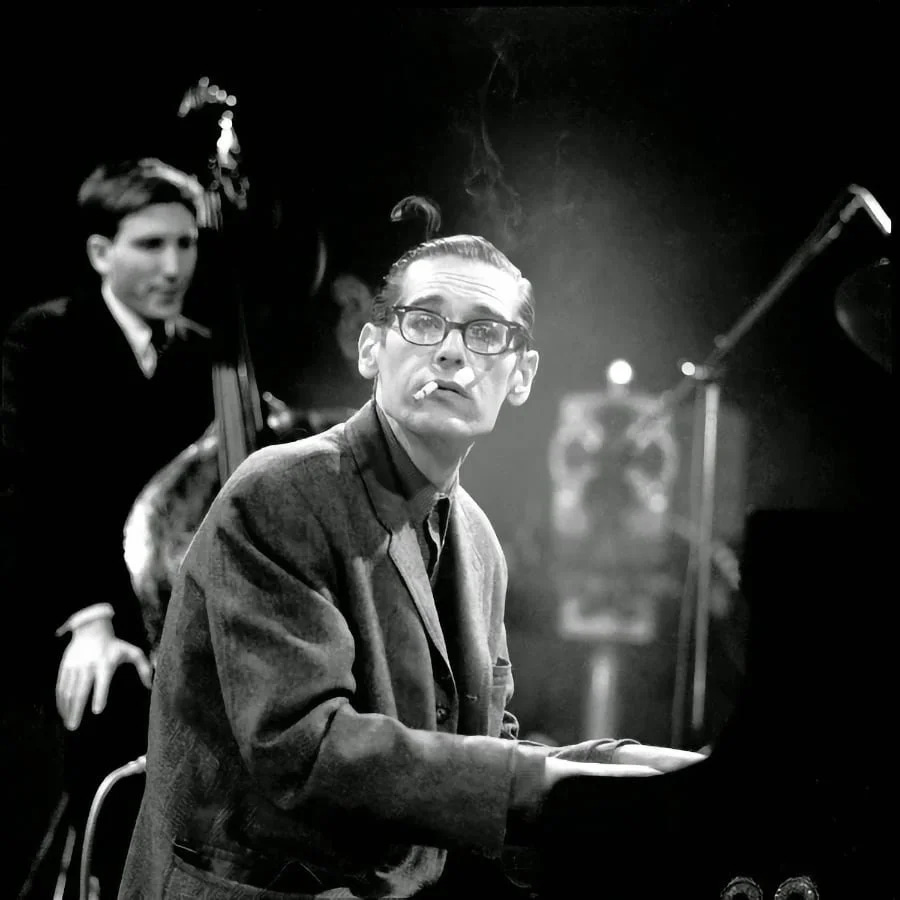
Bassist Chuck Israels attended the Brandeis concert in June 1957. I asked him for his thoughts [photo above of Chuck Israels with Bill Evans in 1965 courtesy of YouTube]:
“After enrolling at MIT in 1954, I began playing the bass in the the university orchestra. Before long, Boston’s jazz scene won me over, and my goal was to play in a trio with pianist Steve Kuhn and drummer Arnie Wise. Steve was a year younger than me and still a student at Newton High School in Massachusetts, and Arnie was a year older and a student at the Massachusetts School of Art.
“Both of these young musicians were playing at a professional level, and I was still gigging as a middling guitarist. They had landed a summer job at a resort in Chesterton, N.Y, and needed a bass player. I was eager to make music at their level.
“By 1957, we had been gigging in Boston regularly, and I’d already heard Bill Evans at a New York club called The Composer. I sensed that his music had the things I valued in Bud Powell and Charlie Parker, along with an expanded palette that included elements from my classical music background. All of that came in a natural, inclusive, unforced fusion that satisfied more of my imagined, ideal musical aesthetic than anything else I’d heard.
“Steve, Arnie and I played occasionally at Brandeis, where we were hired to accompany visiting jazz musicians Don Elliott, Stan Getz and Coleman Hawkins. By then, I was a junior music student at Brandeis, spending more attention learning to play jazz in Boston and Cambridge than to my classes.
“When Gunther Schuller’s Third Stream concert at Brandeis was held in June of 1957, I was enthralled hearing the musicians rehearse at the open-air Ullman Amphitheater, which is no longer on campus.
“I was most interested in the New York players, all of whom were familiar to me, and I was impressed with the skill they exhibited negotiating difficult new music. But most of the music for the concert—unlike Bill’s naturally evolved embrace of wide ranging elements—was a convoluted, contrived insertion of jazz elements into the musical language of classical composers unfamiliar and uncomfortable with the idiom.
“I heard those pieces as difficult and unwieldy, but I remained impressed with the skill of the players and entranced by the chance to hear them play with jazz expression. I don’t remember Jimmy Giuffre’s piece, nor much of Mingus’s difficult music. But George Russell’s All About Rosie had structural elements that were comfortably familiar to jazz players and listeners.
“So when Bill took his solo in the third movement based on the form and harmony of I’ll Remember April, a jazz standard we all knew, I had a window into understanding the extraordinary level of his playing.
“In spite of the high level of the other players, I only remember the powerful effect Bill’s playing had on me and others. He had extended solo space and took advantage of it to play with enormous energy and facility, exceeding the vocabulary of the surrounding written music.
“Much has been written and discussed in appreciation of Bill’s harmonic language, his pianistic sound and touch, and his romantic emotional range. Bill embraced and utilized it in profoundly effective ways, but none of it is entirely new. What was and remains new and unmatched was Bill’s rhythmic inventiveness.
“We’d heard Lennie Tristano demonstrate an expanded vocabulary of cross rhythms in his monumental solo piano recordings, and they’d surely paved the way for Bill. But Bill absorbed the principles and became so comfortable in juxtaposing driving music in cross relationships to a steady, dancing pulse that he took it to an unmatched level of rhythmic invention and excitement.
“That’s what I remember hearing, absorbing and appreciating Bill’s solo. It struck a sense of rhythmic excitement and variety that I was somehow already prepared to understand, embrace, and play along with in ensemble comfort and reliability.
“I don’t remember how much of that rhythmic vocabulary showed up in Bill’s playing when he sat in with Arnie Wise and me at the Student Union, when we were playing there with Steve Kuhn on one of the musicians’ meal breaks.
“But I’m sure that some of my comfort and reliability in that realm must have been felt by Bill, enough so that he thought to call me when he needed a bass player after Scott LaFaro’s tragic death in June 1961. It certainly wasn’t because of my sense of harmony—something I only developed later after intimate exposure to Bill’s musical language.”
Here’s George Russell’s All About Rosie. Bill Evans’s solo comes in the third movement…
Hi Marc, Mundy told me that same story of meeting Bill Evans and inviting him to call if/when he got to New York. He added that Bill called about a year later with some trio gigs. WhenMundell asked if he had a bassist in mind Bill said, "Yes, there's a new guy out in Jersey named Red Mitchell." Mundy continued that they worked some joints where the stage was surrounded by chicken wire, and the promoter ran off with all the money, but they remained lifelong friends.
What can I say? Another great post about a project I'd never heard of before. The name Gunther Schuller is familiar to me but I have nothing from him in my collection. So I just ordered "Modern Jazz Concert" as second-hand Japan CD released in 1988.
"All About Rosie" is wonderful. That's why I ordered the CD. Another piece for my growing Bill Evans collection.
Thanks Marc, for sharing the wonderful thoughts from Chuck Israels with us.
This whole project reminds me of a similar project that took place in Berlin, Germany in 1961. Werner Mueller was conductor of the RIAS dance orchestra at that time a Radio orchestra. But they also played jazz.
Here some more information about this project:
http://www.sonorama.de/index.php?section=WERNER_MUELLER_ORCHESTRA_Jazz_Mutations
Here one of the songs from that record called "Blues Variationen":
https://youtu.be/Q9G82i0DCR8?si=VZVwkxlLzjumk382