


If asked to make a list of leading jazz photographers, most aficionados would probably miss including Steve Schapiro.
Best known for his photojournalism during the civil rights movement, his movie-star portraits and his on-set film stills for classics such as The Godfather, Chinatown and Taxi Driver, Schapiro also worked extensively for magazines. He took the famous cover portrait of Mia Farrow on the first issue of People in March 1974.
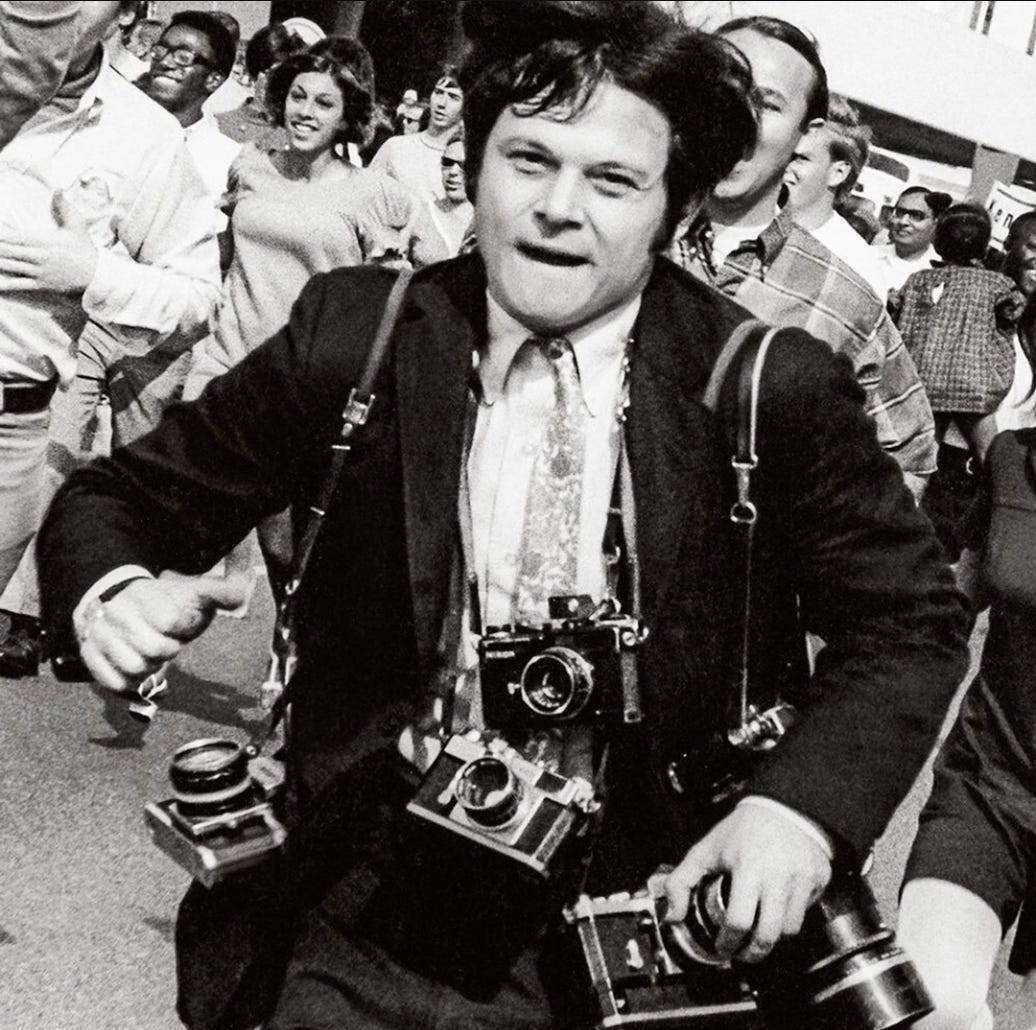
Schapiro admired Henri Cartier-Bresson, who pioneered street photography, and W. Eugene Smith taught him the technical side of photography, including film development and printing. Smith also helped him develop his own perspective. [Photo of Steve Schapiro in the 1960s]
Lesser known are the photographs Schapiro took of jazz legends at two New York performance venues—the Apollo Theater and the Village Vanguard—and in the studio during recording sessions for Riverside Records. Now, a stunning new book of his never-before-seen images has just been published by ACC Art Books with text by Richard Scheinin: Steve Schapiro: Jazz, Best of the Apollo, Village Vanguard and Riverside Sessions.
Schapiro took the images in 1961 and ‘62, just before his career took off. The ones in the book have never been seen before because there either wasn’t a market for them or because only one from the contact sheet was sold and the others remained in Schapiro’s archives. He apparently had to leaf through about 20,000 images to make selections for the book before he died in 2022.
Jazz’s golden years have been documented mostly through black-and-white images and occasional black-and-white shorts or films. Photos of musicians wound up on album covers and in jazz magazines, so we’ve been stuck with the same limited number of pictures of these artists over the decades.
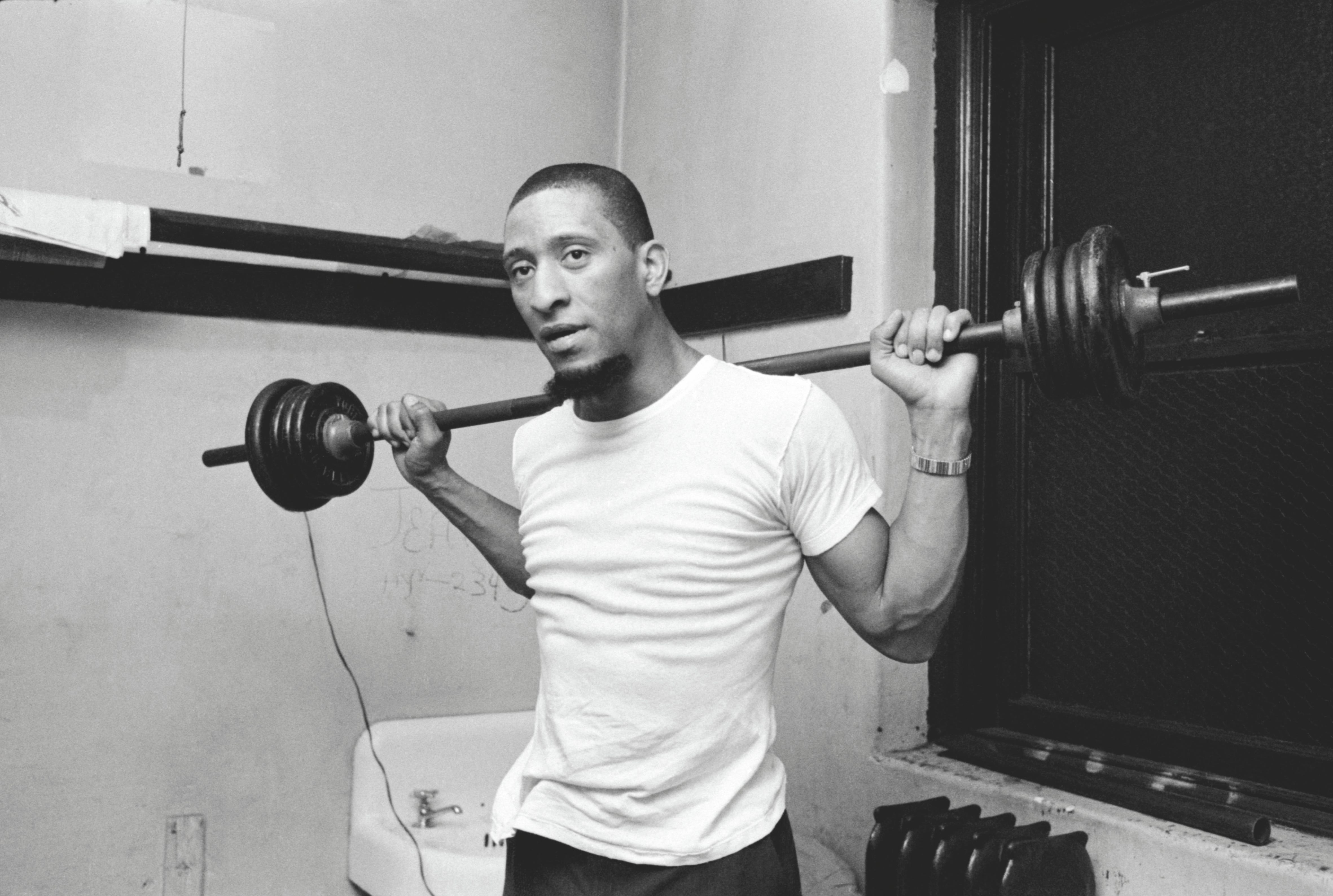
What this means is we don’t really know these musicians beyond the iconic images with which we’re most familiar. Most fascinating about the new book is we get to see our favorite jazz artists in human situations—waiting, reading, napping, lifting weights and more. As Sonny Rollins says in the book’s introduction, “It’s hard for me to look through these pictures with anything but great feeling.” [Photo of Sonny Rollins by Steve Schapiro courtesy of ACC Art Books]
I felt the same way, and I know what he meant. In addition to the nostalgia Sonny must have felt, he was seeing a different side of artists he knew well and worked with. In this regard, he was meeting them for the first time through the photographs.
Why should we care? Because these artists were exceptional, and the images give us a finer sense of their personalities, who they were off stage and at rest. Every single image in this 315-page hardcover, coffee-table book offers a fresh perspective of artists we thought we knew well from photos on album covers.
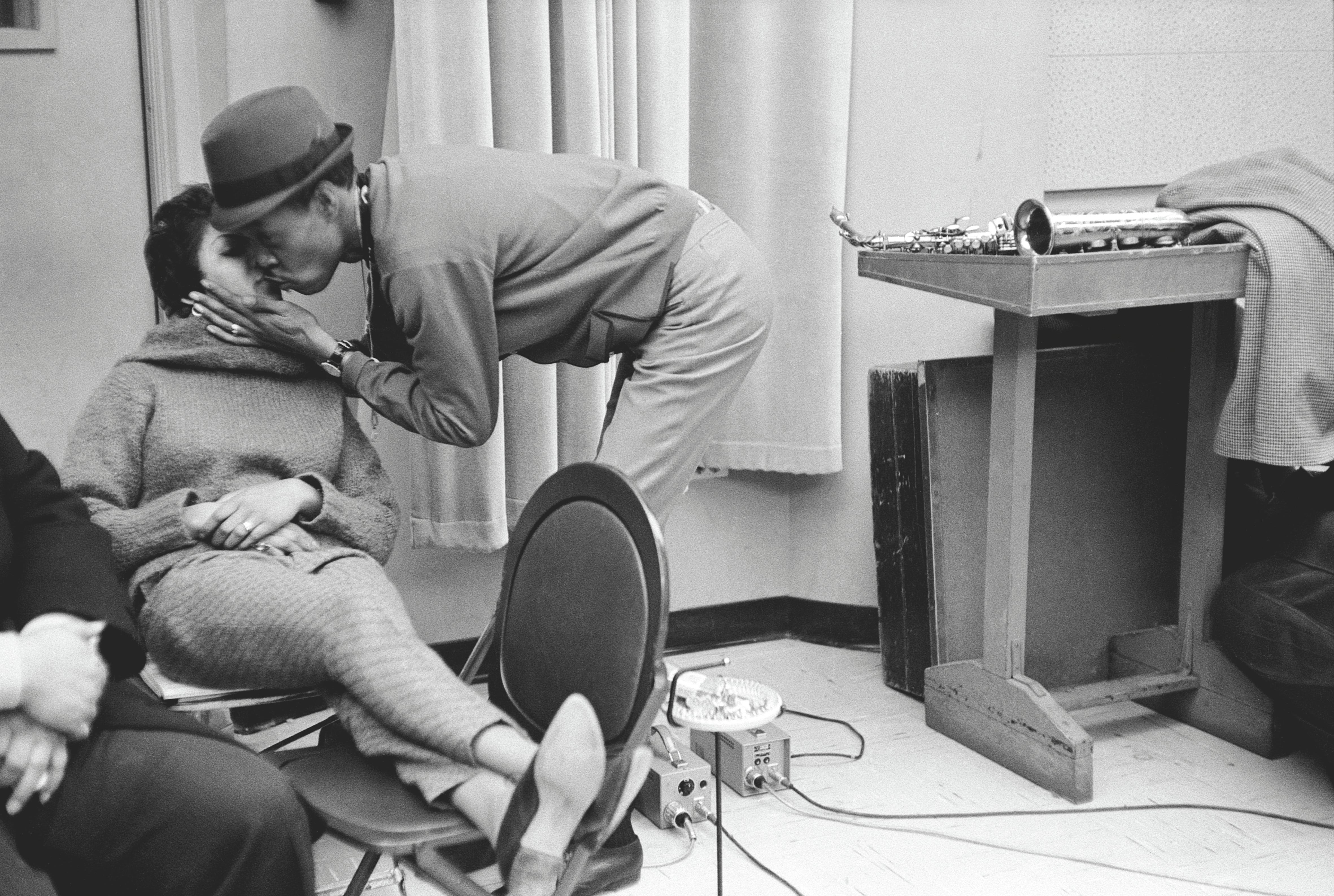
In particular, I loved the series of Bill Evans images, which include alternate takes of his first trio in 1961 backstage at the Village Vanguard. Also captivating are Sonny Stitt playing the tenor with a leg bent and raised, and the one of him kissing his wife, Pamela; and a series of Billy Strayhorn images. [Photo of Sonny Stitt kissing his wife, Pamela, by Steve Schapiro, courtesy of ACC Art Books]
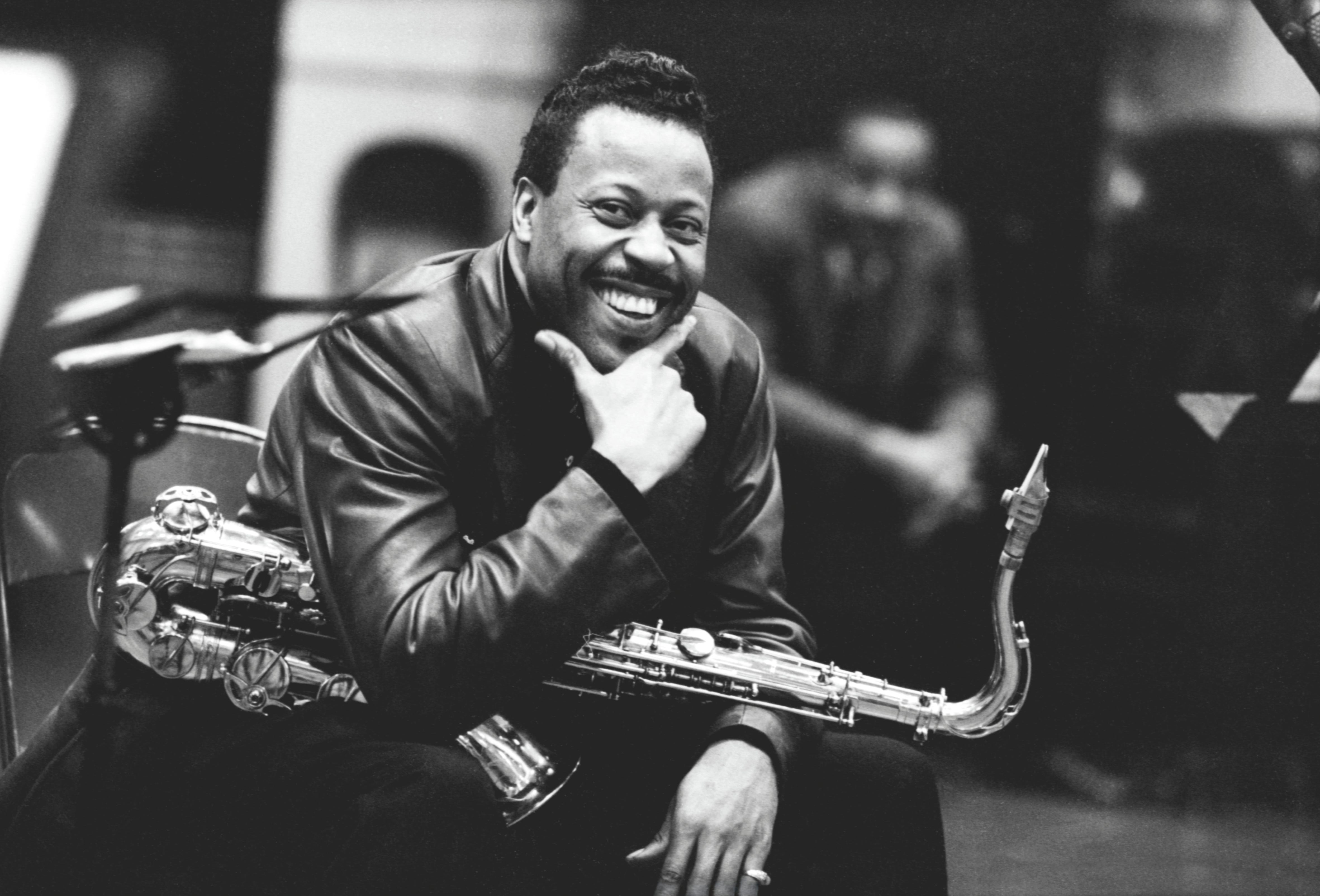
There are photos of Sonny Rollins lifting weights backstage at the Apollo in a T-shirt; candids of Count Basie; one of Riverside producer Orrin Keepnews pretending to throw a left jab at Red Garland, whose head has playfully snapped back; a rare photo of Frank Strozier and one of a young Ray Barretto; and a delightful image of Eddie “Lockjaw” Davis grinning broadly with his tenor in his lap. [Photo of Eddie “Lockjaw” Davis by Steve Schapiro, courtesy of ACC Art Books]
Leafing through the book was like looking at the images beamed back to earth by the astronauts who recently circled the moon. We know the moon is round and pocked with asteroid craters. But seeing the back side for the first time gave me chills. It didn’t look much different than the moon’s face we see all the time, but it was the moon without makeup on, the one napping in the back. As with the other side of the moon, this book shows us a new, unseen side of famed jazz musicians, and all provide us with a greater sense of their humanity.
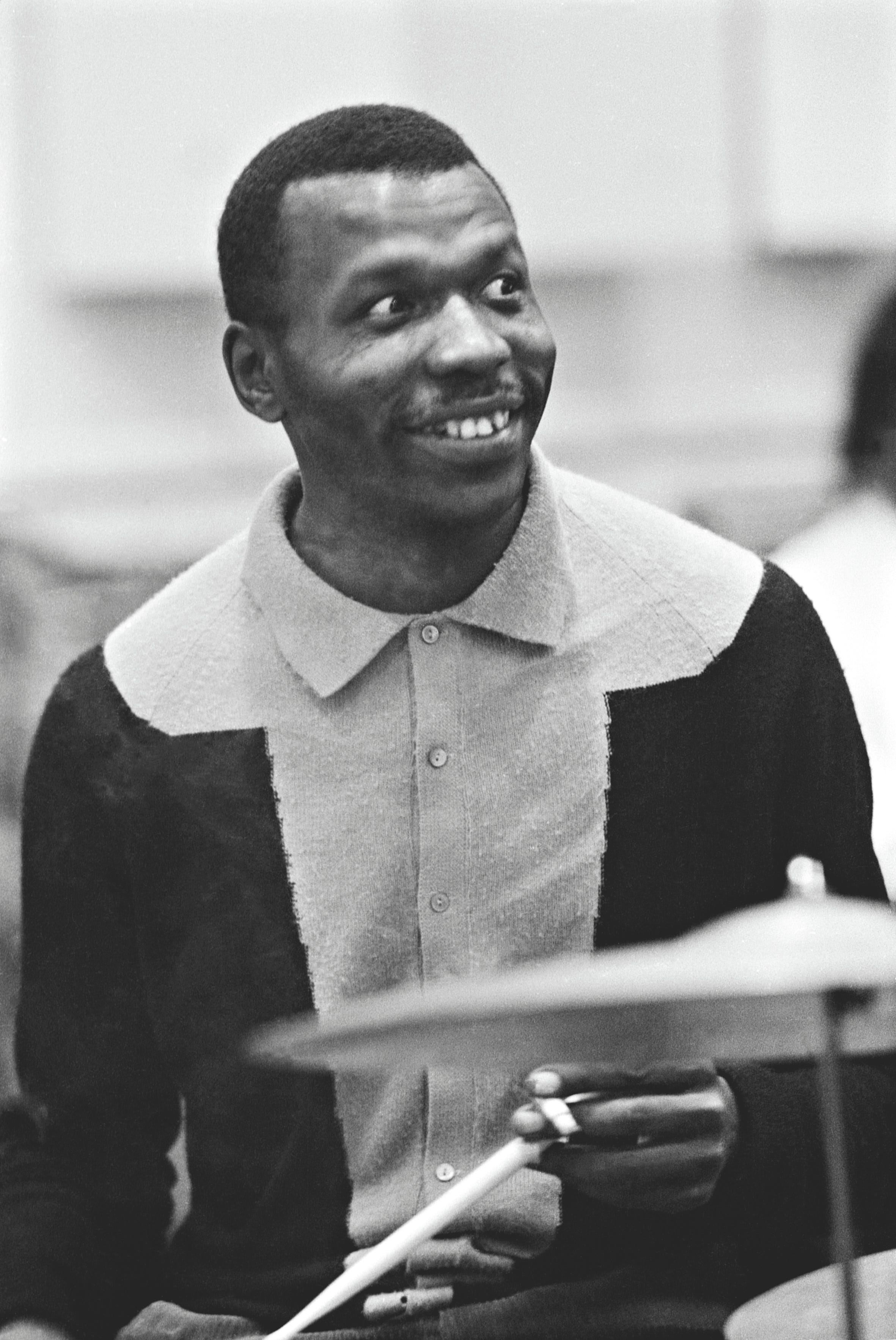
The images also show us the love these musicians had for each other and the joy they felt playing this music. In many ways, Steve Schapiro was William Claxton East. All of the musicians he photographed were cool. His images make them even cooler. [Photo of Elvin Jones by Steve Schapiro courtesy of ACC Art Books]
Steve Schapiro died from pancreatic cancer at his home in Chicago, on January 15, 2022, at the age of 87.
You can buy the book here. If you’re remotely curious, spring for it. Just don’t wait until it’s out of print and selling for $1,000 on Ebay.
This kind of reminds me of the picture book "Jazz-Rock Fusion: The People and the Music" from the 70's (with a picture of Wayne Shorter on the cover). The difference was, back then there were no websites where you could go see a photo gallery of what they looked like or a discography of what they played on. Not to mention we didn't all walk around with a camera built into the phone in our pocket (or even the phone in our pocket) to capture memories if we were lucky enough to see them in concert.
Purchased! Thank you for showing the way!
An aside: this coming Fall, there will be a book released of Chicago photographer Don Bronstein's musician photos, many of which haven't been seen since his untimely death in 1968. He was the primary photographer for Chess/Argo/Checker.