

For every great jazz saxophonist recording in the 1950s, there were dozens of others who were highly gifted but struggled to carve out a name for themselves. Many went into R&B as sidemen, where they found steady work touring and recording with headline artists.
One of these musicians was Fred Jackson. Born in Atlanta in 1929, he played with Little Richard in the early 1950s and accompanied vocalists Billy Wright and Lloyd Price. His recording career began in 1949 as a jump-blues sideman on sessions led by baritone saxophonist Paul Williams for Savoy.
Jackson’s first album for Blue Note as a sideman was on organist Baby Face Willett’s Face to Face in 1961. He also recorded on two albums led by organist Big John Patton—Along Came John (1963) and The Way I Feel (1964).
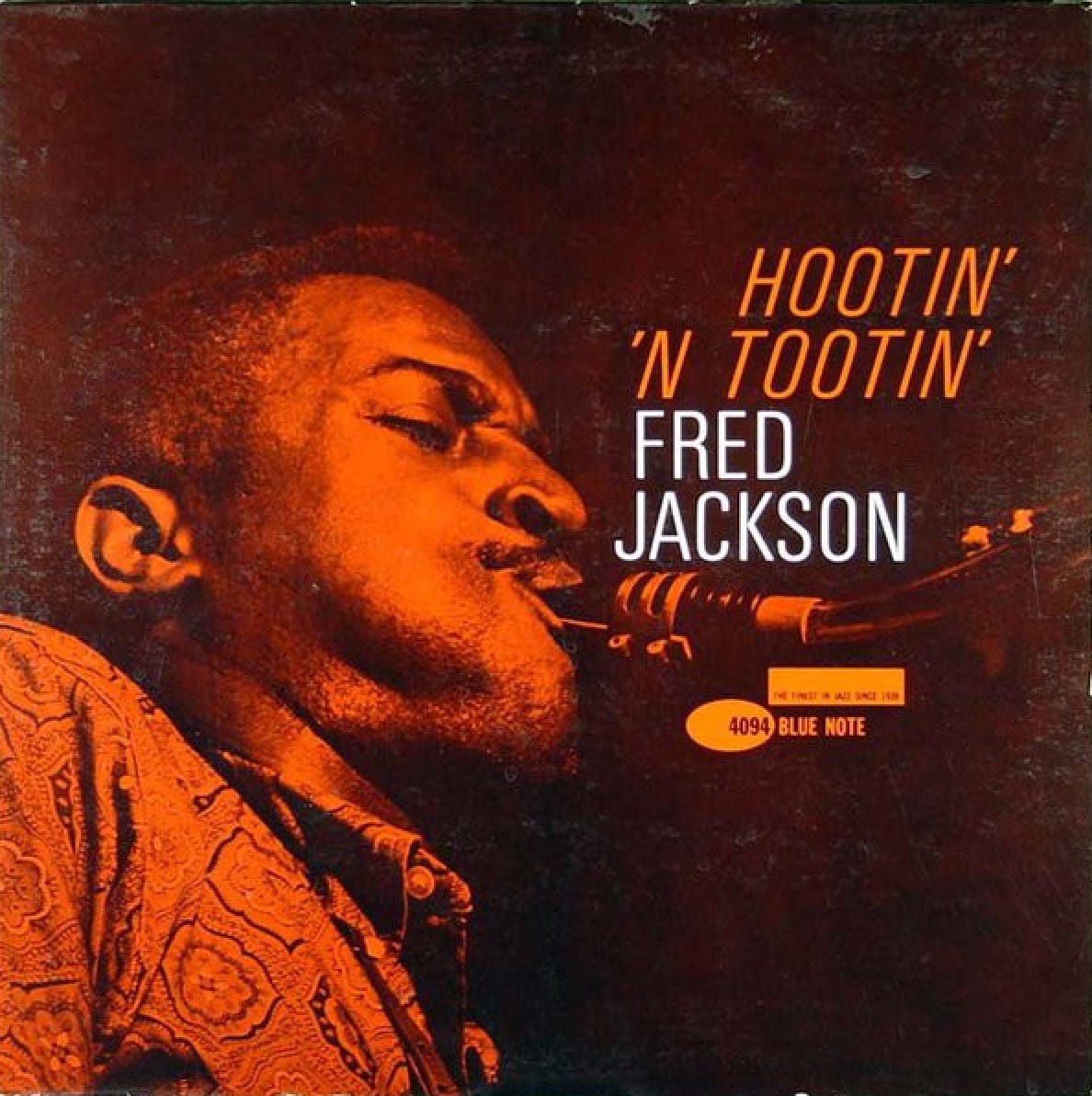
His sole leadership album was Hootin’ ‘n Tootin,’ recorded for Blue Note in February 1962. The band featured Fred Jackson (ts), Earl Van Dyke (p,org), Willie Jones (g) and Wilbert Hogan (d). The tracks are Dippin’ in the Bag, Southern Exposure, Preach Brother, Hootin’ ‘n Tootin’, Easin’ on Down, That’s Where It’s At and Way Down Home.
Van Dyke, of course, would go on to become a member of Motown’s Funk Brothers, the label’s studio band. Jones was a notable pianist from Chicago and Hogan had perhaps the highest profile of the musicians on the session, playing with Lionel Hampton’s and Ray Charles’s big bands.
Another seven originals were recorded by Jackson for Blue Note in April 1962 for a second album. This date included Fred Jackson (ts), Earl Van Dyke (org), Willie Jones (g), Sam Jones (b), Wilbert Hogan (d) and unknown (cga-1,shaker-1). The tracks were Stretchin’ Out, Mr. B.J., Egypt Land, Teena, On the Spot, Minor Exposure and Little Freddie.
But these songs were never released on a second Blue Note album. Instead, the tracks were added to the CD release of Hootin’ ‘n Tootin’ in 1998.
Jackson had a singular forceful sound, especially on the blues, and he was a terrific composer. All of the tracks on the first and second Blue Note sessions were originals.
So why was his Blue Note career short-lived? My guess is that the label decided instead to put its resources behind tenor saxophonist Stanley Turrentine, who had a stronger jazz feel. Both musicians had a similar forceful sound and both had come up through R&B in the 1950s.
Fred Jackson is in his late 90s.
Blue Note’s Tone Poet series has released this one on 180-gram vinyl here.
Here’s Hootin’ ‘n Tootin,’ with the tracks from both sessions (if they don’t play though in the embed, you’ll find the complete Blue Note tracks here)…
I just heard all the tracks from both sessions. Thanks for remembering Fred Jackson. Again, a name I'd never heard before. Great that he's still with us 🙂.
Fred Jackson was a most capable musician, with nothing to criticize in his playing. But if you're comparing him with fellow Blue Noter Stanley Turrentine, Jackson had a leaner, less distinctive and aggressive sound. Similar comparisons might be made of tenor saxophonist Joe Henderson and his younger brother Leon. Leon Henderson made two albums for Blue Note in the late 1960s with pianist Kenny Cox and the Contemporary Jazz Quintet (based in Detroit). Leon never had the career that Joe had.