

On Feb. 26, 1917, the Original Dixieland Jass Band took the freight elevator up to the new studio of the Victor Talking Machine Co. at 46 W. 38th St. in Manhattan. Once the quintet set up, they recorded the first jazz record—a shellac 78 rpm disc with Livery Stable Blues on one side and Dixieland Jass Band One-Step on the other.
For the next 31 years, the 78 was the standard format for recorded music. But there was a problem. By 1942, the record business had grown significantly and along with it technology to bring the music to listeners. This technology included upgraded microphones for better-sounding studio recording, better gear to create studio master discs used to produce copies, radio networks with greater reach, better radios, better phonographs and the rise of the jukebox. While the new technology was great for the consumer market, it was misery for the musicians union.
Over the previous decades, the American Federation of Musicians had become powerful thanks to a growing number of members and their dues. But with by 1941 and the start of World War II, the union was beginning to see a decline. Records were replacing live orchestras in radio studios, jukeboxes were replacing musicians in bars and restaurants, and phonographs were cutting into the popularity of live performances.
As a fix, the union demanded that record companies pay the union a royalty on records sold to support musicians replaced by the new technology. The big three record companies—RCA, Columbia and Decca—refused, so the union decided to prohibit its members from recording.
Once America went to war, labor strikes were not only considered unpatriotic but also were prohibited by law in many cases. The union countered by claiming its recording prohibition was a ban, not a strike. The union pointed out that its members weren’t full-time employees of the record companies, merely hired hands. So the job action couldn’t be considered a strike. Instead, the union argued, freelance workers were simply choosing not to work, which was their right.
For a year, the record industry was virtually paralyzed. In 1943, the ban pushed Decca in the U.S. to the brink of bankruptcy. As a result, Decca decided to give in to the union’s demands, paying a royalty on record sales. Smaller independent labels such as Capitol also took the same deal. Only RCA and Columbia had the resources to hold out, convinced that their powerful position would force the union to acquiesce.
Then RCA’s and Columbia’s band leaders began to defect. By the fall of 1944, the remaining two companies had no choice but to throw in the towel. But they had a demand of their own. They would pay the royalty to the union but only if the agreement expired at the end of 1947, requiring renegotiation. The record companies knew that technology was changing fast and didn’t want to be locked in.
The AFM agreed, but as 1947 wound down, the record companies wanted to end the payments entirely and the union wanted a greater share of the record industry’s profits. At midnight of 1947 and the start of 1948, the second recording ban went into effect and lasted nine months. The agreement reached established an independent Music Performance Trust Fund (MPTF) to hold company royalties that would be used to hold live performances and hire unemployed musicians.
But something else took place in 1948 that revolutionized recorded music. Columbia introduced the 33 1/3 album. As 15 million veterans returned home from World War II, the new G.I. Bill gave them rock-bottom mortgage rates, making home ownership possible. This sicianstrend led to the rapid growth of American suburbs, and with home ownership came vacuum cleaners, washing machines and phonograph consoles.
The introduction of Columbia’s vinyl 10-inch 33 1/3 LP for pop music and 12-inch LP for classical, along with the use of magnetic tape in recording studios, meant greater profits. With the launch of the LP, homeowners could now sit and relax longer on sofas before having to get up and flip over a record.
The AFM was happy because the albums sold weren’t being played on the radio and a greater number of union musicians were needed to record the growing number of albums.
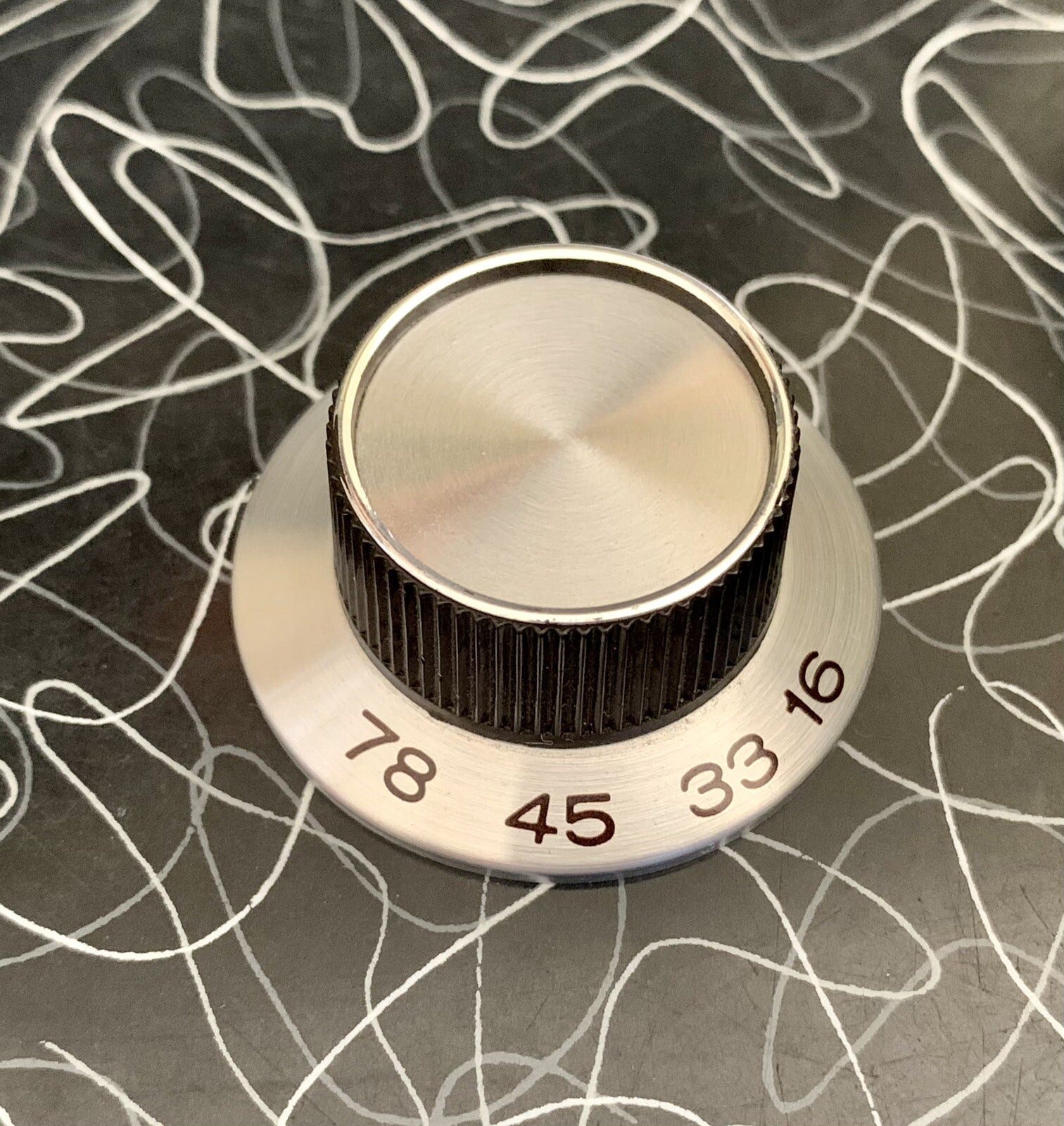
The only company that wasn’t happy was RCA. Even though Columbia offered to share its new 33 1/3 technology with every company, RCA stubbornly refused the offer and developed its own format—the 45 and 45 player. Multiple 45s could be stacked on the player’s spindle and would drop down to the turntable once the record playing was finished. This battle between the two formats became known as the “speed wars,” which lasted from 1949 to 1950.
The 45 at first required record companies to press both a 10-inch album and a 45 EP set to cover its bases in case RCA’s format dominated the marketplace. Then RCA ran into trouble. Its classical musicians were repulsed by the 45’s limited fidelity and began defecting to Decca and Columbia. Clearly, the 33 1/3 format was the future.
What would RCA do with the 45? It decided to use it first for children’s records. Then a great opportunity emerged. The 45 would replace the 78 in the pop category and soon become the format of R&B, country and rock ‘n’ roll, favored by teens holed up in suburban bedrooms with portable turntables.
From 1951 to 1955, the 10-inch 33 1/3 LP dominated the pop album market. Why didn’t record companies immediately offer pop albums on 12-inch LPs? It wasn’t cost-effective. Classical albums were priced higher, since classical fans tended to have more money and could afford the higher tab.
By contrast, pop customers had less, and record companies could drop the cost of a pop album only so much before they lost money. What’s more, pop songs required record companies to pay royalties to publishers. Classical music didn’t have royalties.
George Avakian, Columbia’s head of the label’s pop division, had an idea. Here’s what the late producer told me when I interviewed him for my book, Why Jazz Happened (University of California, 2012):
“We were about to call it quits [with a 12-inch pop LP] when Bill Wilkins, Columbia’s comptroller, said, ‘Look, if you can get the copyright rate down to 1.5 cents per song from 2 cents, you’ll earn a profit of 6 cents on each 12-track LP.’ Even more important from a profit standpoint, Wilkins urged me to explore a more efficient use of the presses when producing records. In essence, Wilkins suggested I let the presses run longer to produce more LP jackets.
“He said this would help us avoid losing time changing plates. Every album should have a 10,000 or 15,000 press run of jackets, he said, and if we didn’t sell them all, the overrun wouldn’t be that big an expense to discard.
“To avoid the need to start the presses again to print jackets, we could use the night shift to do the work, since the presses typically ran all night. By not using extra electricity to restart presses, the cost of manufacturing was lowered and allowed us to cut the cost of making each record.”
The move contained the cost of record production but didn’t address the label’s copyright royalty obligations. Avakian and Columbia’s president James Conkling tried to convince music publishers who held the rights to pop songs to cut their copyright rate to 1.5 cents.
“We offered them a deal,” said Avakian. “We said, ‘Lower your rate for a year. We think we will make much more money if you do this—and you will, too.’ Every publisher agreed to cut their rate except one—Music Publishers Holding Corp., the country’s largest publisher, that was owned by Jack Warner of Warner Brothers.”
The solution, Avakian said, was to use a tiny fraction of MPHC’s material. Within a year, MPHC realized its financial mistake and agreed to lower its rate, provided Avakian didn’t tell anyone in the industry that it had given in.
The result in 1955 was the 12-inch pop and jazz album.
You're too good! I hate you....not really. Thank you for a most informative article.
Very interesting post Marc