

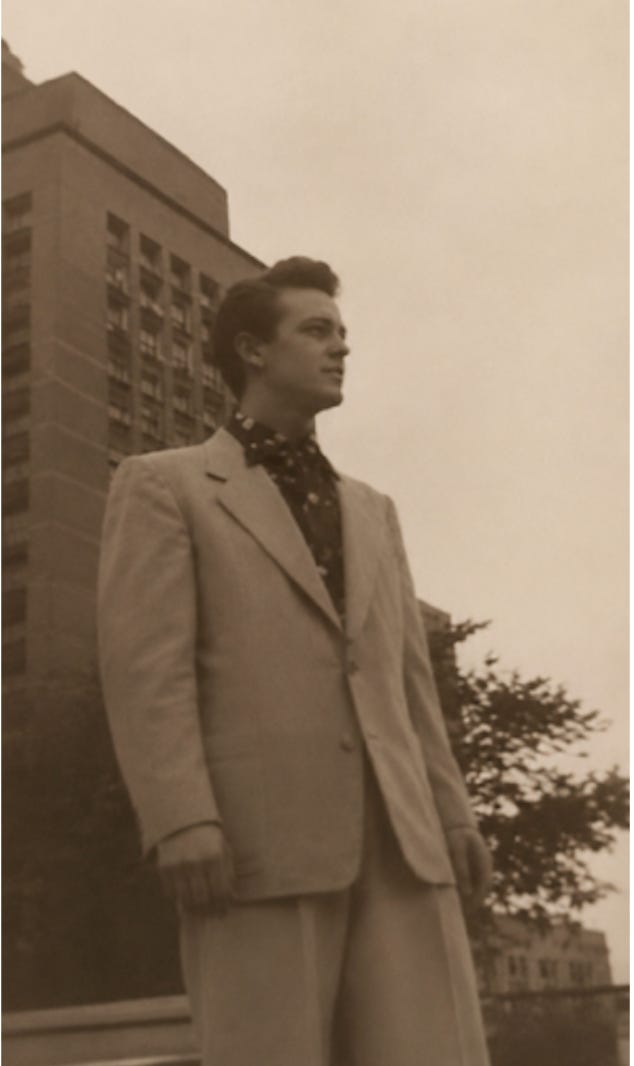
Last week, I received an email from Melodi Graf McCraine. She wrote that she was the daughter of tenor saxophonist Bob Graf and that she had researched her father and created a website to honor him. I said how about an interview? She said, Sure!” [Photo above of Bob Graf courtesy of Melodi Graf McCraine]
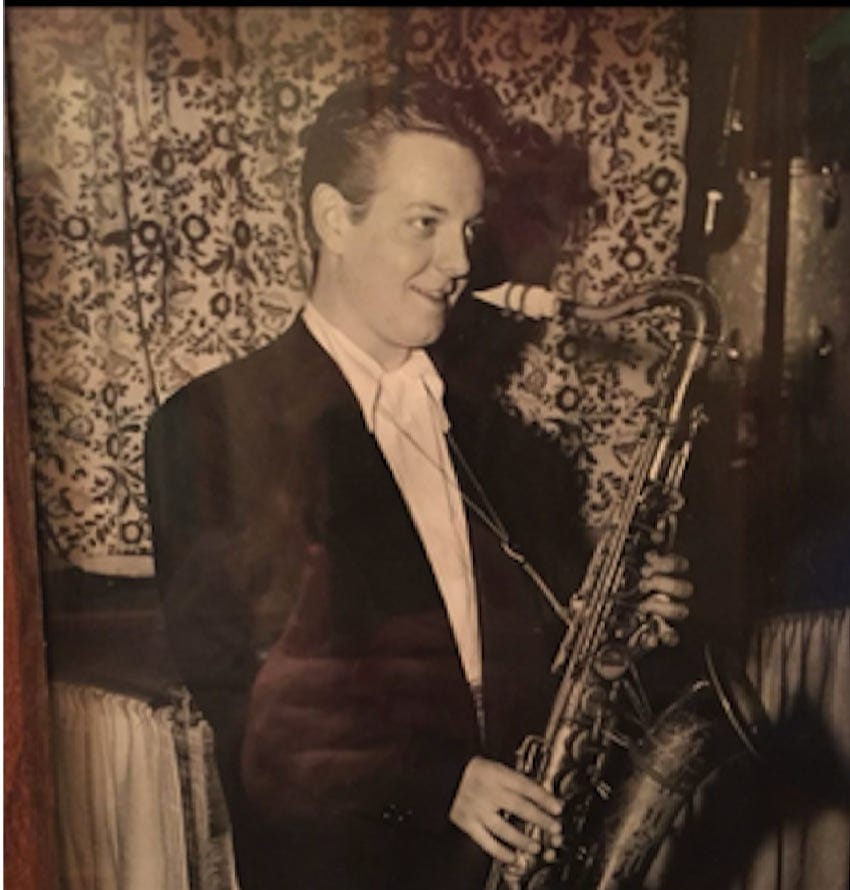
Melodi told me that Graf was the first tenor saxophonist in the Count Basie Septet in 1950, thanks to a recommendation by trumpeter Clark Terry. He was soon recruited to join Woody Herman’s Third Herd, and Wardell Gray replaced Graf in Basie’s group. Graf also pops up in recordings with the Chet Baker Big Band, leading a quartet backing jazz vocalist Bev Kelly and with Grant Green in 1960. [Photo above of Bob Graf courtesy of Melodi Graf McCraine]
Then the trail goes cold. I interviewed Mel by email and rounded up my favorite Bob Graf clips so you could have a listen:
JazzWax: How old were you when your father, Bob Graf, died?
Melodi Graf McCraine: He died when I was 15, in 1981, at age 54. For most of my life, his jazz years felt just out of reach. I knew that music filled our house. I knew that people lit up when he walked into a room. But the full extent of his career—who he played with, where he toured and the reputation he had built up before walking away from that life—is something I’m still piecing together through research.
JW: Where was your dad born?
MGM: My father was born in St. Louis in 1927. His mother, Emily, was a telephone operator for Southwestern Bell. His father, Otto, was an executive at a tool-and-die company that held patents on airplane parts. Bob was their only child, and his mother encouraged his love of music.
JW: What inspired him at the start?
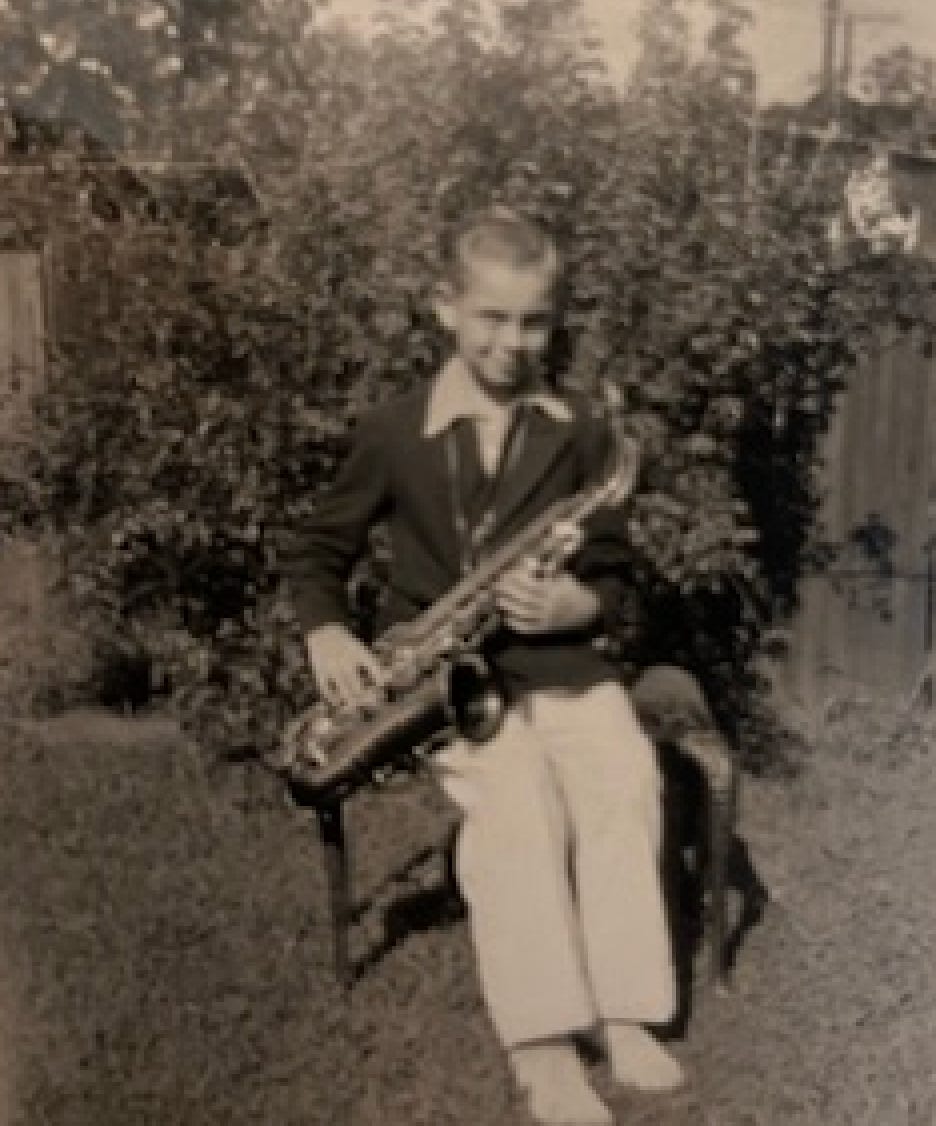
MGM: I don’t know yet. What I can tell you is that something got into him early. Just this morning, I found a photograph of him at around age 7 already holding a saxophone. [Photo above of Bob Graf at age 7 courtesy of Melodi Graf McCraine]
JW: Who was his biggest Influence?
MGM: Zoot Sims. His mother had taken him to see Zoot play when Bob was around 13. That concert changed everything but I’m not sure where it took place. What I know is that Zoot was a stylistic influence. Since my father was born in 1927 and Zoot in 1925, they were almost exactly the same age, so it was likely a peer influence from Zoot’s recordings. Their paths crossed when my father was in the Woody Herman band from 1950 to 1951.
JW: How did your dad learn to play?
MGM: His mother got him a saxophone, and he began with formal lessons and learned to read music. He practiced in the bathroom for the acoustics. He loved hearing the sound of his King saxophone bouncing off the tile walls. But his true gift was his ear, which greatly helped his improvising.
JW: What did you learn through your research?
MGM: By digging through the Smithsonian Institution’s archives in Washington, D.C., I learned who he played with and how prominent he was. As for when he began playing professionally in St. Louis and with whom, I’m still piecing that together. What I do know is that he was deeply embedded in the local scene before his first big break.
JW: What was that break?
MGM: Trumpeter Clark Terry knew my father well enough that he recommended him to Count Basie in 1950, when he was forming a small group. My dad was 23. That level of trust between musicians doesn’t happen overnight. In his Smithsonian oral history transcript, Clark recalled recommending my father to Basie when Basie was looking for a tenor saxophonist. Clark said he described my dad as “a young Caucasian kid named Bob Graf.” Basie’s response, Clark said, was “Get the kid.” Bob joined, and the septet opened at the Brass Rail in Chicago.
JW: Who else talked about your dad in the Smithsonian oral histories?
MGM: Buddy De Franco named him directly as “Bobby Graf from St. Louis,” the original tenor saxophonist in Basie’s first group before Wardell Gray.
JW: Your dad must have left Basie pretty quickly, since his first recording with Woody Herman took place on May 5, 1950.
MGM: I suppose so. My dad was recruited at the Brass Rail in Chicago, where the Basie group was playing. Carlos Gastel, Woody Herman’s manager, kept coming into the club and hired him away for Woody’s band. We know the band was on the road in Nashville by June 25, 1950 because my dad and the band recorded in a studio there. This was Woody’s Third Herd, which recorded for Capitol. The late Steve Voce, a longtime BBC jazz broadcaster who wrote for Jazz Journal International for nearly 60 years, did an extensive study of the Herman bands. He identified my dad as the featured tenor saxophone soloist who follows trombonist Bill Harris on the Capitol track Sonny Speaks. Four more sides followed for MGM Records in January 1951. On this session, Bob was teamed with fellow tenor saxophonists Phil Urso and Jack DuLong.
JW: You dad’s jazz recording discography is silent until 1956. Do you know why he left Herman and what he did in between?
MGM: Not yet. I know he worked the West Coast circuit through the mid-50s, including with the Lighthouse All-Stars at Howard Rumsey’s Lighthouse Cafe in Hermosa Beach. But he wasn’t working off his card to join Local 47. St. Louis was still his home. On Oct. 18 1956, he was in Los Angeles recording with the Chet Baker Big Band for Pacific Jazz. He played alongside Fred Waters on alto saxophone, Phil Urso on tenor and Bill Hood on baritone.
JW: What about his family life at this point in time?
MGM: My dad was married to his first wife, Helen. They had two sons—Bobby Jr. and Kirby, who, sadly, took his own life when he was young. Helen never recovered.
JW: What did your father do after his Chet Baker recording session?
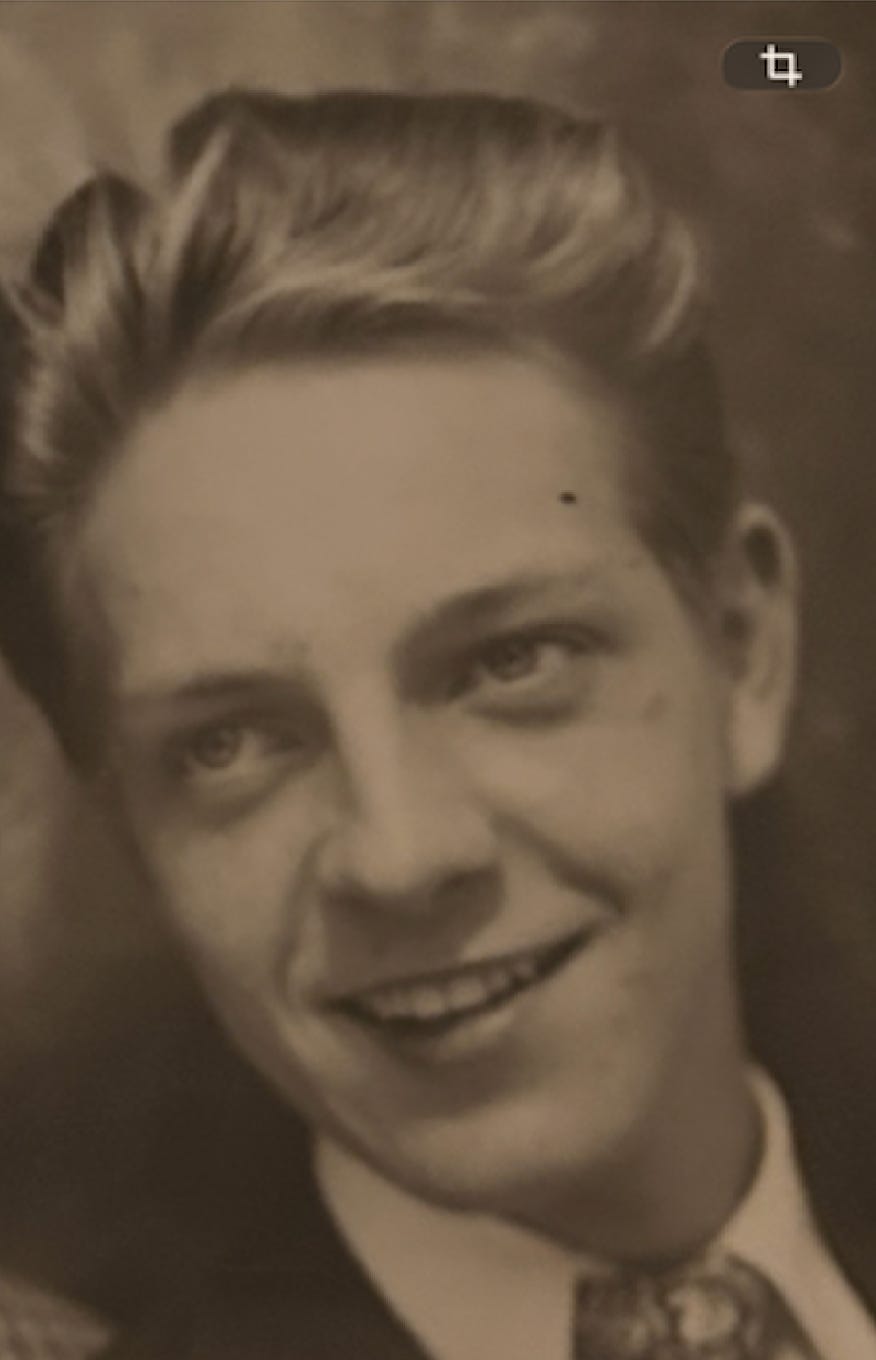
MGM: He didn’t disappear from music. In January 1958, he performed at Westminster College and Peacock Alley in St. Louis with local musicians Ron Ruff (ts,fl), Jimmy Williams (p), Bob Maisel (b) and Al St. James (d). The gigs were recorded by Delmark Records, produced by label founder Robert Koester. His playing on Street of Dreams was singled out in the liner notes. [Photo above of Bob Graf courtesy of Melodi Graf McCraine]
JW: In November 1959, his quartet backed vocalist Bev Kelly in St. Louis for VGM records.
MGM: Yes, that recording sat unreleased for more than 20 years before surfacing on VGM the year he died.
JW: His final jazz recording was with Grant Green.
MGM: In December 1959 and February 1960, he performed alongside guitarist Grant Green, organist Sam Lazar and drummer Chauncey Williams at the Holy Barbarian Coffee House in St. Louis. In 1963, Down Beat magazine mentioned that he was leading a bossa nova quartet at a St. Louis club called the Fallen Angel. The music never left him. It simply lived in smaller rooms.
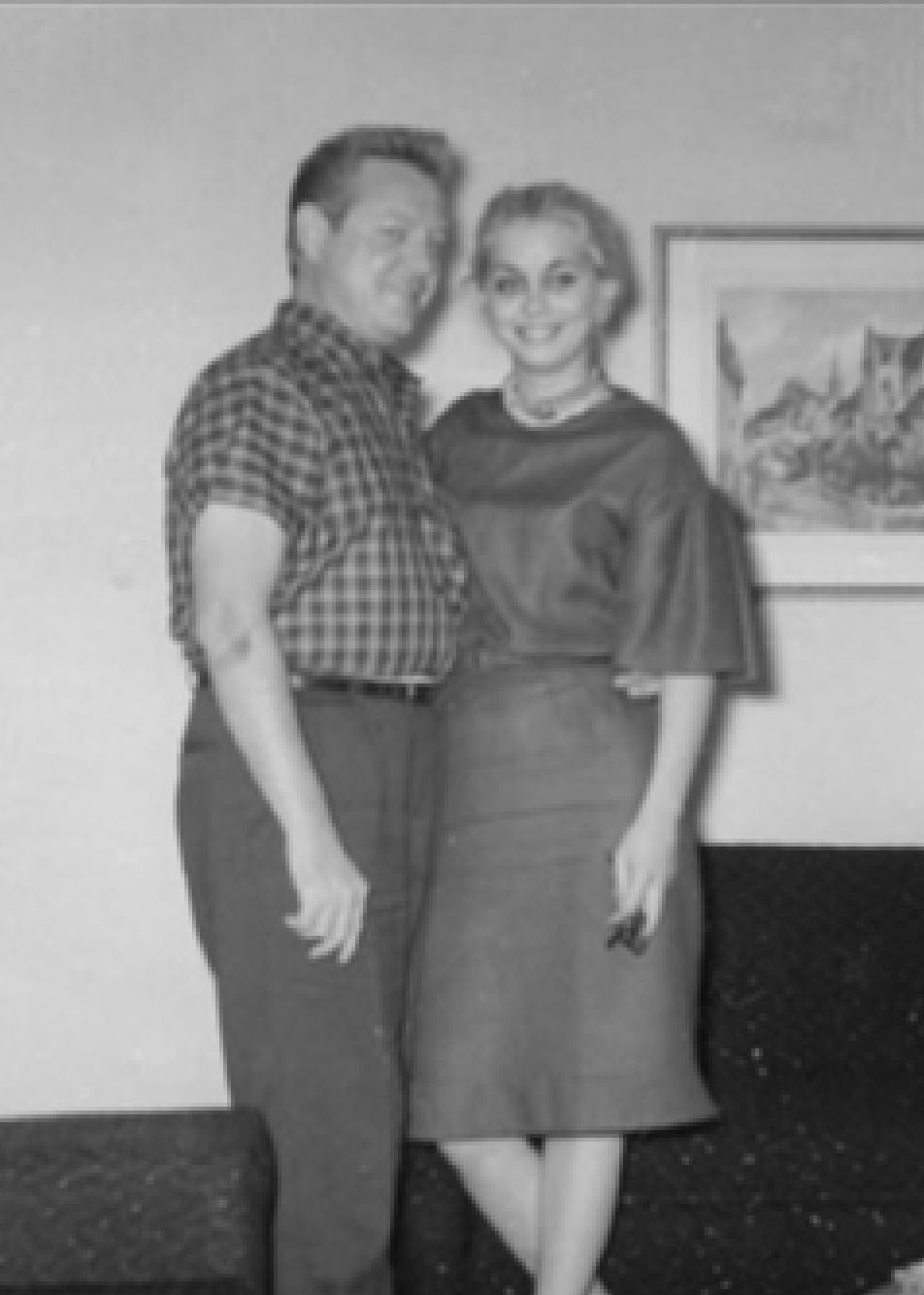
JW: When did he meet your mom, Martha?
MGM: He met her at a St. Louis gig, around 1959. She was 12 years younger and completely unimpressed by the Hollywood stories. She told him flat out there was no future if he kept traveling. He had some obligations to finish but he chose her. My older sister, Vicki, was born in 1961. To make ends meet, he started taking gigs in St. Louis but soon went into business repairing instruments full time. He had contracts with local schools covering everything from clarinets to flutes. Occasionally, he played local gigs. That was their deal. [Photo above of Bob and Martha Graf courtesy of Melodi Graf McCraine]
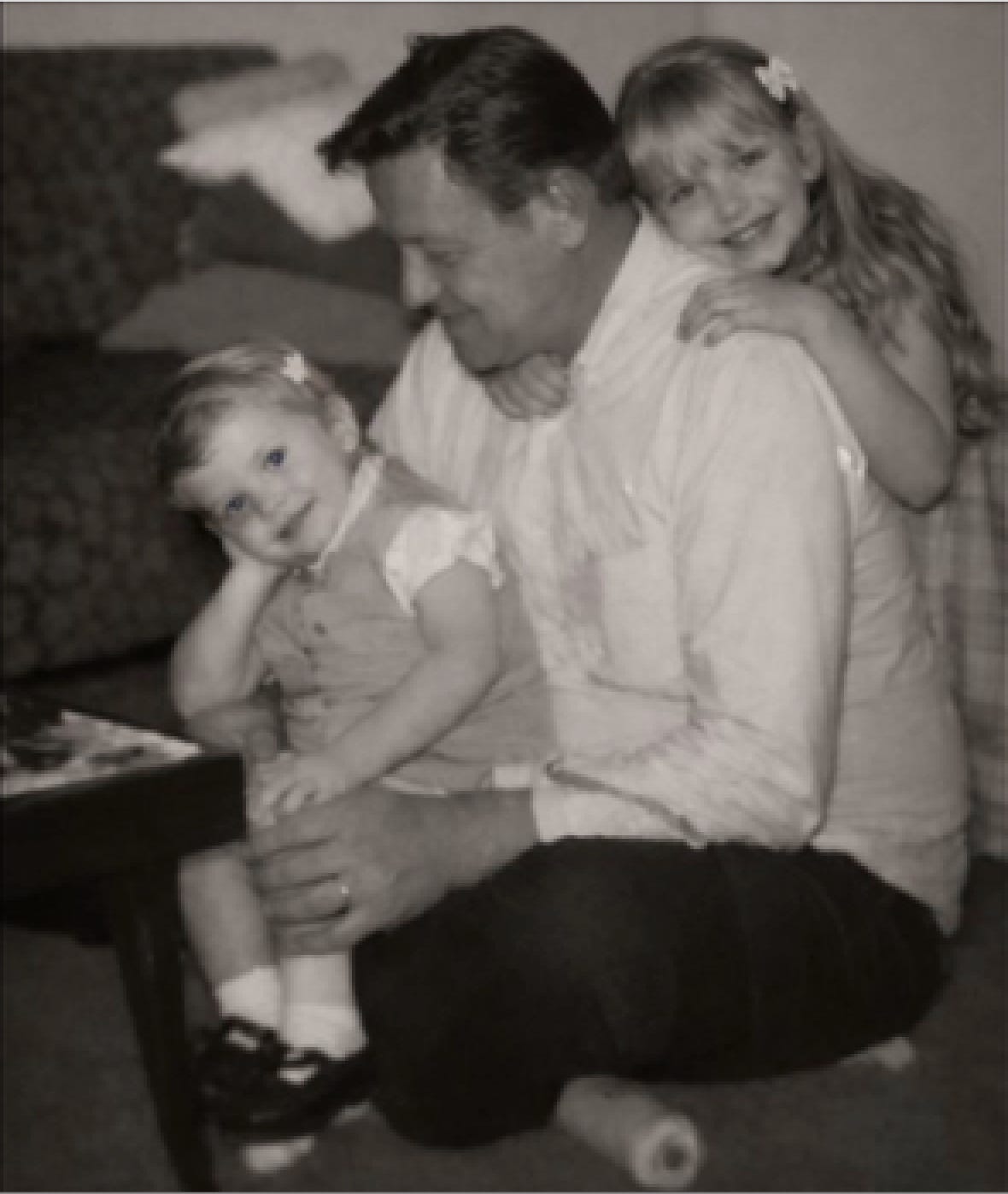
JW: How was your parents’ relationship?
MGM: My parents were married for a couple of decades. My mother passed away nine years ago. She never remarried. He was the love of her life. They had their struggles, but they always found their way back to each other. He died of health complications just months after their last reconciliation. He had lived hard and the years caught up with him. [Photo above of Bob Graf with Melodi, left, and Vicki, courtesy of Melodi Graf McCraine]
JW: And his first wife?
MGM: I believe Helen passed away in the early 1980s, not long after my dad died.Their divorce wasn’t related to Kirby’s death. There was a long period of estrangement between my dad and his first family. I didn’t meet my half-brothers until I was around 8 or 9.
JW: How did your mother take his death?
MGM: It was hard. She talked about him until the end. I remember being in Best Buy with her years ago and coming across a Chet Baker CD. That opened up a whole conversation about those California years. I would show her YouTube clips of his recordings and she would watch quietly and then start talking.
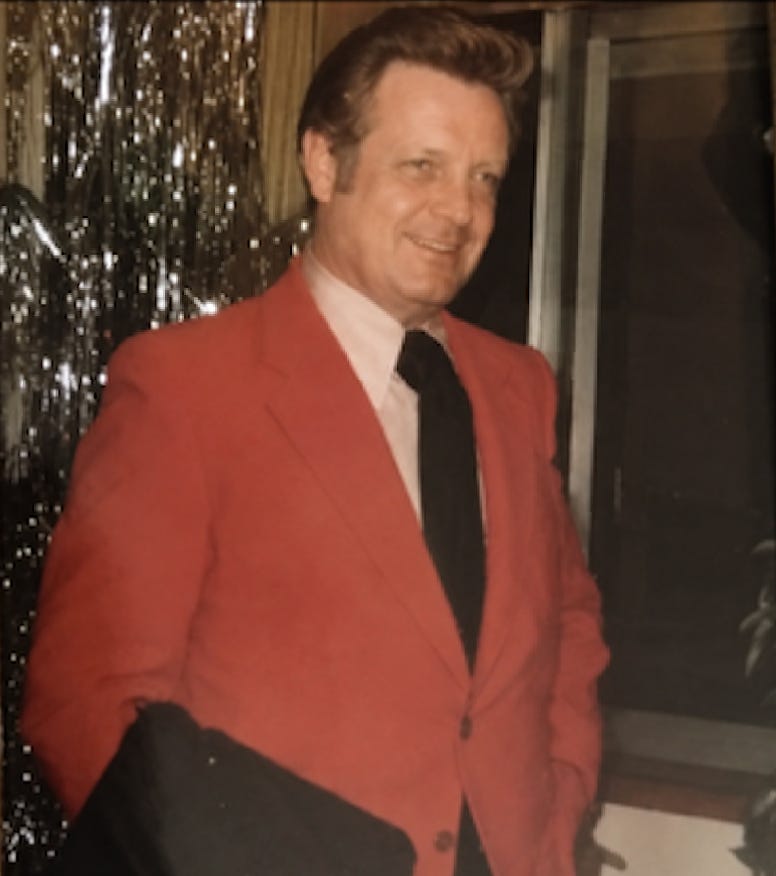
JW: Do you feel now that you know your father better?
MGM: For sure. In a way, my research has given me an opportunity to get to know him through articles and oral history transcripts. I’ve built a full archive of recordings, photographs, personnel lists and source citations at BobGrafMusic.com (go here). He deserves to be remembered. It just took a daughter who wouldn’t let go. I only wish he were still around. I have a zillion questions.
Tracks with Bob Graf:
Here’s Graf in May 1950 with Woody Herman’s superb reed section playing Neal Hefti’s arrangement of Pennies From Heaven, with a vocal by Herman and the Alyce King Vokettes. The band: Conte Candoli, Bernie Glow, Paul Cohen and Don Ferrara (tp); Neal Hefti (tp,arr); Eddie Bert, Bill Harris and Jerry Dorn (tb); Woody Herman (cl,as,vcl); Al Cohn, Buddy Wise and Bob Graf (ts); Marty Flax (bar); Dave McKenna (p); Red Mitchell (b); Sonny Igoe (d); Milt Jackson (vibes) and Alyce King Vokettes (vcl)…
Here’s the Herman band on June 25, 1950 playing Al Cohn’s arrangement of Sonny Speaks. The band: Doug Mettome, Conte Candoli, Don Ferrara and Rolf Ericson (tp); Herb Randel, Bill Harris and Jerry Dorn (tb); Woody Herman (cl,as); Phil Urso, Buddy Wise and Bob Graf (ts); Marty Flax (bar); Dave McKenna (p); Red Mitchell (b) and Sonny Igoe (d)…
Here’s the Chet Baker Big Band on October 19, 1956 playing Phil Urso’s arrangement of Worrying the Life Out of Me. The band: Chet Baker (tp); Bob Burgess (tb); Fred Waters (as); Phil Urso (as,ts,bs); Bob Graf (ts); Bill Hood (bs); Bobby Timmons (p); Jimmy Bond (b) and James McKean (d). The tenor solo sounds like Graf…
Here’s Street of Dreams from Bob Graf at Westminster in St. Louis on Jan. 11, 1958…
Here’s singer Bev Kelly on Nov. 29, 1959 with the Bob Graf Quartet singing Detour Ahead. The fidelity is miserable but you do catch some terrific Bob Graf and a taste of Kelly…
And finally, here’s Bob Graf (ts), Sam Lazar (org), Grant Green (g) and Chauncey Williams (d) at the Holy Barbarian in St. Louis on December 25, 1959 or February 20, 1960 playing The Holy Barbarian Blues…
For the one's who follow Bob: The Bob Graf Sessions. Recorded at Westminster College and of Peacock Alley, Freshsound FSR 1616
As Peter Coppock points out, the "Cousins" chart began life in 1956 as "Blues Groove" before eventually becoming "Cousins." It was composed by Herman lead trumpeter John Coppola. But its real origins go back to 1939.
https://www.youtube.com/watch?v=lquUOp9IKrI
Count Basie: “Pound Cake,” May 19, 1939.
https://www.youtube.com/watch?v=Zp18BTZZ9w4
Woody Herman: “Cousins” (comp. John Coppola), November 23, 1963.
Based on Lester Young’s May 19, 1939 solo.
To confuse matters further, in 1967 "Cousins" and Frank Foster's "Tomorrow's Blues Today" appeared on a Herman album called "Woody Live East and West." But the labeling of these two pieces was reversed on the album.