

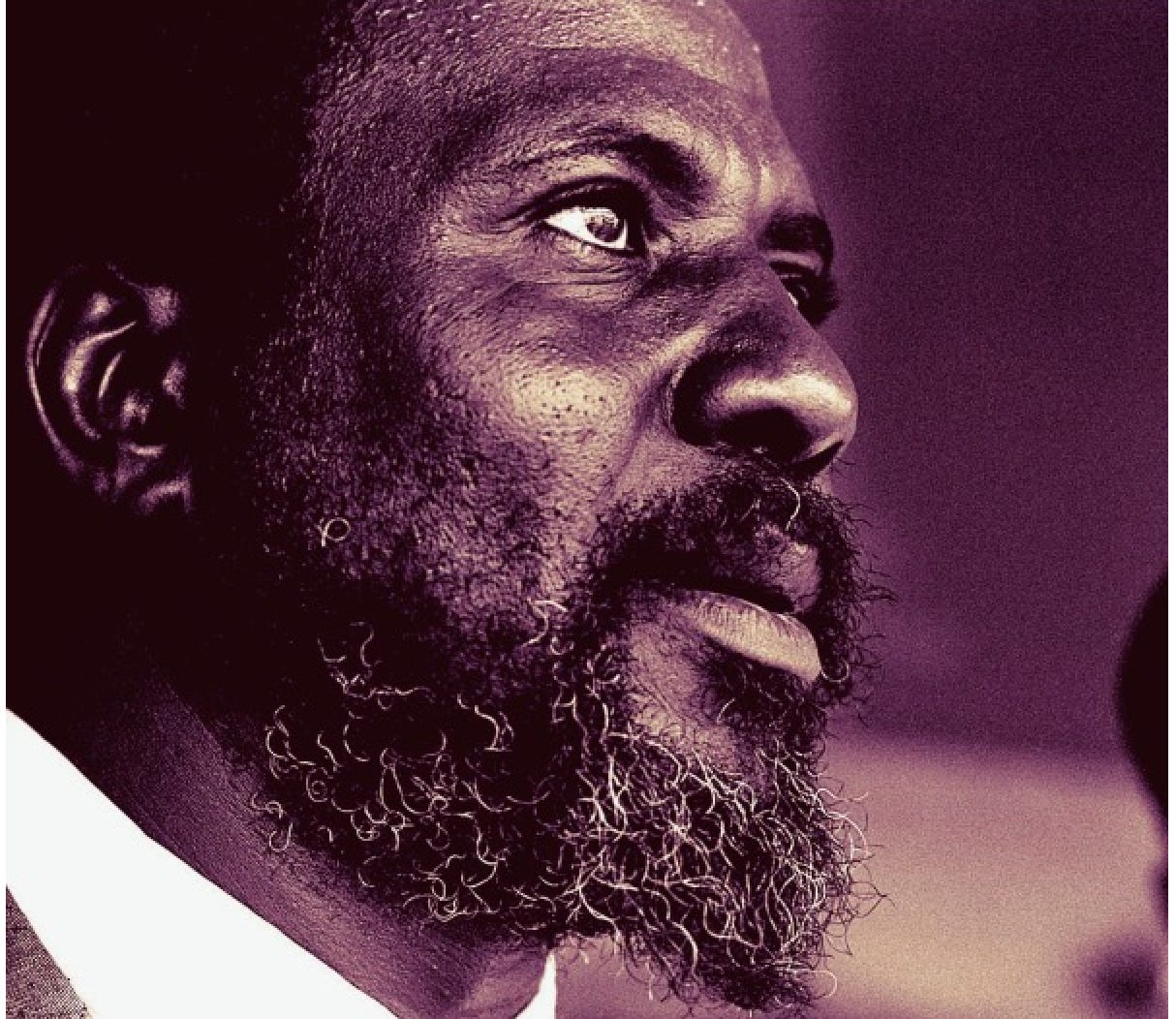
Touring in Europe in the fall of 1967, pianist Thelonious Monk performed at the Salle Pleyel concert hall on November 3. Monk fronted his working quartet—Charlie Rouse (ts), Larry Gales (b) and Ben Riley (d). He also featured Ray Copeland (tp) on multiple tracks and Clark Terry (tp), Jimmy Cleveland (tb), Phil Woods (as) and Johnny Griffin (ts) on others. [Photo above of Thelonious Monk in Paris in
The lineup was odd for Monk, who was accustomed to touring with his working quartet. On this tour, he was a participant in a series of concerts produced by George Wein, who suggested Monk expand his group to to pull in a wider audience.
Monk at first wasn’t happy but gave in, provided he had artistic control, could choose the guest players and could use arrangements by Hall Overton, who had arranged Thelonious Monk Orchestra at Town Hall in 1959.
The concert was captured live by France’s ORTF (Radio France) and later preserved and released as Thelonious Monk Nonet Live in Paris 1967 by France’s Concert Records and by bootleggers over the years.
In 2002, the Thelonious Monk Estate’s Rhythm-A-Ning Entertainment acquired the archival reels and had them restored and digitally remastered by engineer Rudy Van Gelder. The masters then remained unreleased for over two decades due to label legacy issues, industry barriers and the Monk Estate’s insistence on managing independent rights.
In April of this year, the first half was finally released as Monk: Live in Paris 1967, Vol. 1, curated by T.S. Monk (Thelonious Sphere Monk III). A few days ago Monk: Live in Paris 1967, Vol. 2 was issued.
What makes these two releases special are the inclusion of Ray Copeland, Clark Terry, Jimmy Cleveland, Phil Woods and Johnny Griffin and the perky tempo of the performances. The sound is marvelously clean.
Copeland’s experience with Monk dates back to 1954; Terry played with him several times, as early as 1956; Woods first played with Monk at the Town Hall concert in 1959; for Cleveland and Griffin, this tour was their first encounter with Monk.
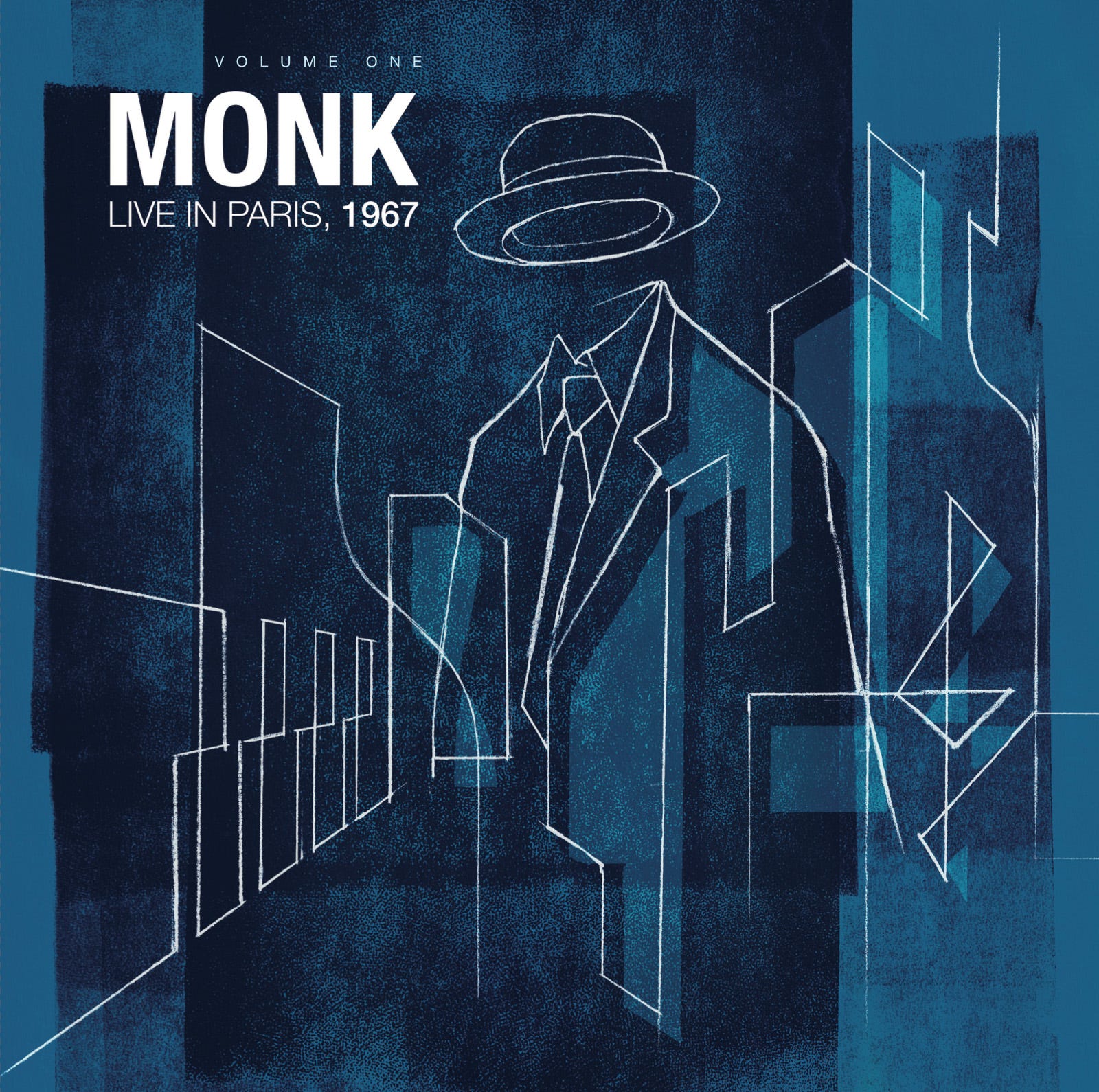
The tracks:
Vol. 1
A1 Intro
A2 Epistrophy
A3 Evidence
B1 Ruby My Dear
B2 We See
Personnel:
Thelonious Monk — piano (all tracks)
Ray Copeland — trumpet (A2, A3, B2)
Phil Woods — alto saxophone (A2, A3)
Johnny Griffin — tenor saxophone (A2, A3)
Charlie Rouse — tenor saxophone (all tracks)
Jimmy Cleveland — trombone (A2, A3)
Larry Gales — bass (all tracks)
Ben Riley — drums (all tracks)
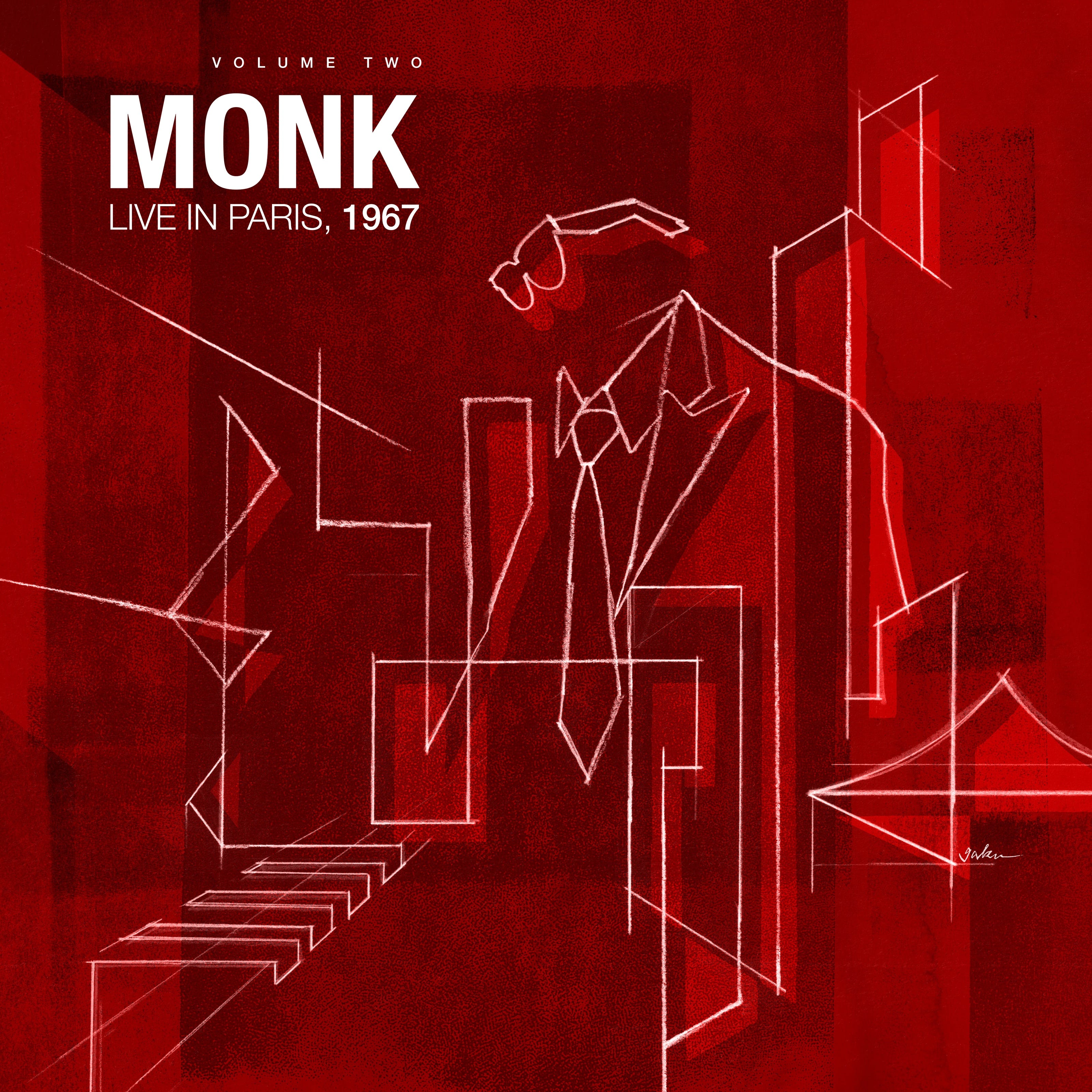
Vol. 2
A1 Intro
A2 Blue Monk
A3 Epistrophy (reprise)
B1 Oska-T
Personnel:
Thelonious Monk — piano (all tracks)
Clark Terry — trumpet (A2, A3)
Ray Copeland — trumpet (A2, A3, B1)
Phil Woods — alto saxophone (A2, B1)
Johnny Griffin — tenor saxophone (A2, A3, B1)
Charlie Rouse — tenor saxophone (all tracks)
Jimmy Cleveland — trombone (A2, A3, B1)
Larry Gales — bass (all tracks)
Ben Riley — drums (all tracks)
The push and pull between the horns and Monk’s quartet creates wonderful creative tension. Each of the special guests had a distinct style and sound that they retained as they slipped into Monk’s groove. Not only does it work, this colliding of approaches results in highly charged Monk. George Wein had the vision and Monk figured out how to pull off the merger with spectacular results.
Monk: Live in Paris, 1967 Volumes 1 and 2 are available on 180-gram vinyl and digital platforms such as Spotify and Apple Music.
To buy Vol. 1, go here. To buy Vol. 2, go here.
Here’s Oska-T…
"Monk at first wasn’t happy but gave in, provided he had artistic control, could choose the guest players and could use arrangements by Hall Overton, who had arranged Thelonious Monk Orchestra at Town Hall in 1959."--Marc Myers
Actually, Hall Overton's charts were not used in 1967. He wrote elaborate arrangements for a 10-piece band for the 1959 Town Hall concert and the 1963 Lincoln Center concert; each band had seven horns and a somewhat different instrumentation. The 1967 bands were an octet (with five horns) and a nonet (with six horns) respectively. The charts for these two 1967 bands were thrown together at the last minute by the guest sidemen, most of all Phil Woods, who was an experienced arranger. (Monk was a composer, but not an arranger.)
Johnny Griffin was actually part of Monk's working quartet (also including Ahmed Abdul-Malik [bass] and Roy Haynes [drums]) that performed/recorded at the Five Spot in August 1958, producing the albums Thelonious In Action and Misteroso.
But yes, it was Jimmy Cleveland's only stint with Monk.
Thanks for the article -- I'll be looking for both volumes on YouTube!