

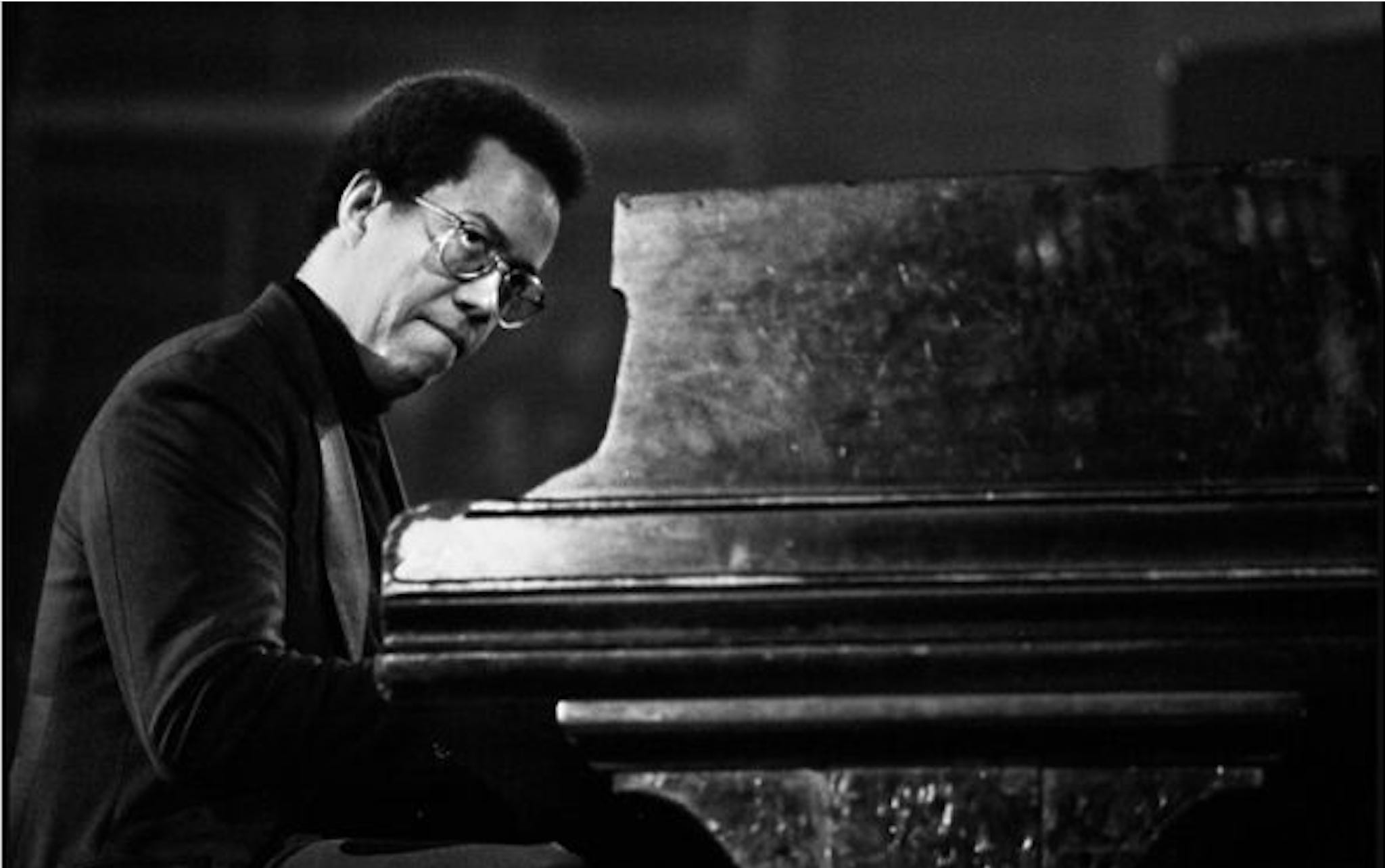
In 1975, pianist Cedar Walton formed a cooperative quartet in which there was no leader, just a group run collectively by four superb jazz musicians. At the time, Walton could not record under his own name due to contractual obligations. The original ensemble featured Cedar Walton (p), George Coleman (ts), Sam Jones (b) and Billy Higgins (d). [Photo above of Cedar Walton courtesy of PianoGroove.com]

Their first studio album, Eastern Rebellion, was recorded in New York on Dec. 10, 1975 for Wim Wigt’s Dutch Timeless Records and released in 1976. It was Timeless’s first release 50 years ago this month.
Walton had formed Eastern Rebellion as a way to workshop, arrange and record his compositions. On the first two studio albums, all of the compositions were by Walton, who had a forceful, elegant touch on the keyboard. The quartet was dynamic and provocative while playing bop, hard bop and modal jazz styles.
The quartet’s name was based on Walton’s rebellion with himself and his artform at a time when electrified instruments were being incorporated by jazz groups to attract a larger, younger audience. Walton and the group were rebelling against fusion.
All of the musicians lived in the Eastern part of the U.S., and the name was a play on Easter Rebellion, the name of the group of Irish rebels depicted in the 1959 James Cagney film Shake Hands With the Devil, which Walton had watched and enjoyed. The film is set in 1921 Dublin, where the Irish Republican Army battles the Black and Tans—ex-British soldiers sent to quash the rebels.
Walton’s concept was a natural extension of his hard-bop work with the Jazztet (1960-’61), co-led by trumpeter Art Farmer and saxophonist Benny Golson, and with Art Blakey and the Jazz Messengers (1961–’64) before leaving to lead his own small groups.
In the mid-1970s, when many younger jazz musicians were shifting to electric rock and soul, Walton’s group clung to the acoustic format. If not for Eastern Rebellion and the Timeless recordings, we might not have Walton’s vast catalog of originals.

Most important were the group’s first four records for Timeless, which established their sound and documented their evolution. Eastern Rebellion 2 (1977) featured Walton with Bob Berg (ts) replacing George Coleman and adding Curtis Fuller (tb) on two tracks. Eastern Rebellion 3 (1979) featured the same lineup, with Fuller on all tracks, and Eastern Rebellion 4 (1983), with David Williams (b) replacing Sam Jones and Alfredo “Chocolate” Armenteros (tp) added to the group.
Eastern Rebellion would go on to record three additional studio albums and live recordings before disbanding in 1994. During this period, Walton recorded separately as a leader and sideman.
To order the Eastern Rebellion albums, go to Timeless’s site here or to Amazon, and search under each album title.
Cedar Walton died in 2013 at age 79.
Congratulations to Wim and Ria Wigt for their hard work over the years and the 50th anniversary of Timeless Records.
Here’s Bolivia from Eastern Rebellion…
Here’s Ojos de Rogo from Eastern Rebellion 2…
Here’s Incognito from Eastern Rebellion 3…
And here’s Manteca from Eastern Rebellion 4…
Bonus: Here’s Eastern Rebellion live in concert for an hour at the 1976 Umbria Jazz Festival, with Walton, George Coleman, Sam Jones and Billy Higgins…
'Eastern Rebellion' one of the finest discs of the 1970's
A StoneColdClassicTM
Thank you for shining light here. The Umbria recording is a real treat — great camera work watching those guys play!