

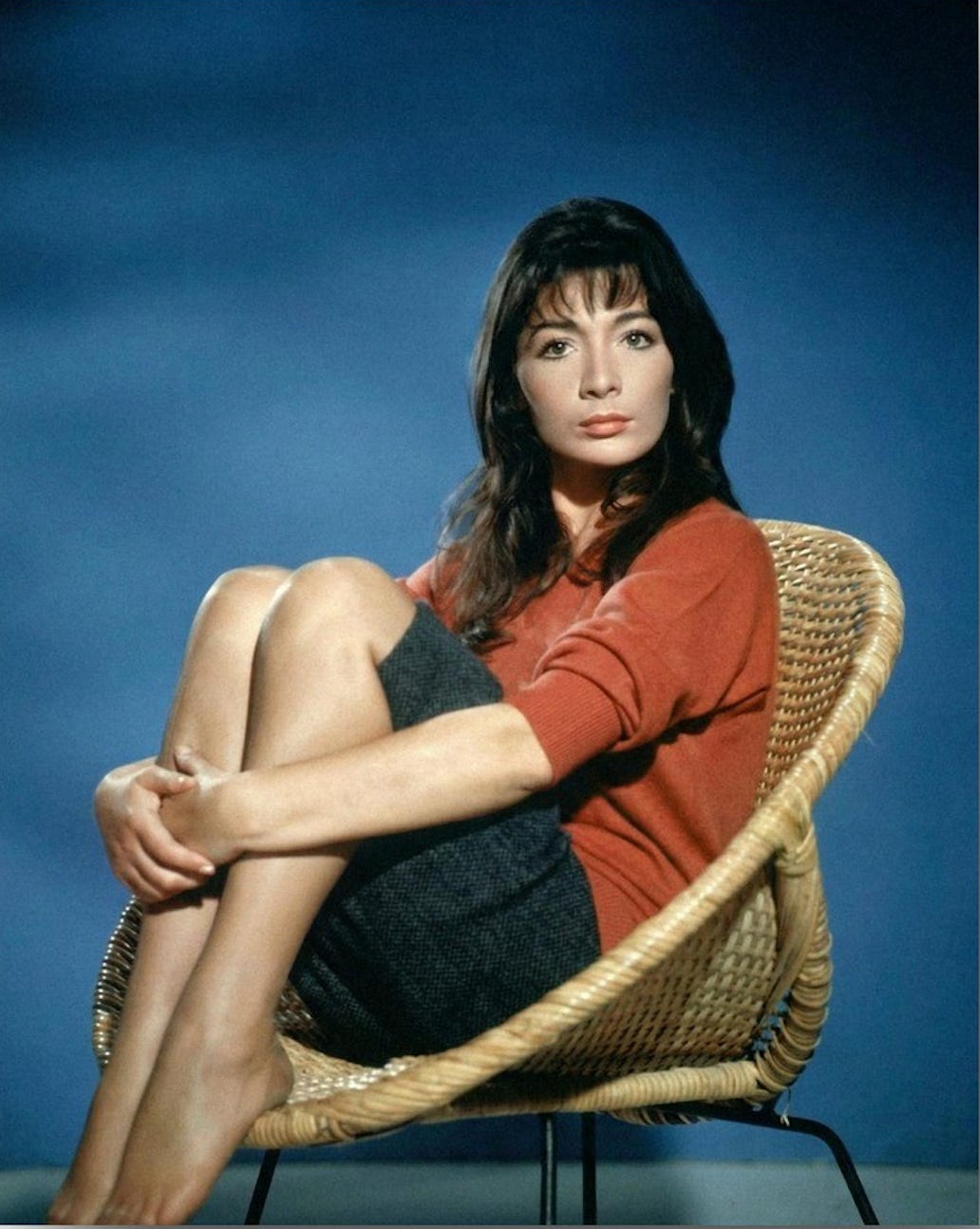
In jazz circles, the name Juliette Gréco has almost always been followed by the name Miles Davis, the trumpeter and her one-time lover. Most jazz fans know almost nothing about her, her stardom in France or the astonishing quality of her voice and her captivating delivery. In France, she was as big a deal as Davis, perhaps bigger given her movie presence, and he knew it. [Photo above of Juliette Gréco, courtesy of Ebay]
I have a soft spot for all French singers of the 1950s. My parents had about two dozen records that they brought home from Paris after moving there in 1952. My father was born there in 1915 before his family continued their journey to New York from Poland. He also had spent time in the city in the Navy, during and after World War II,
My father, Lou, was a war artist with an uncanny gift for capturing likenesses. Before enlisting, he worked creating movie posters for 20th Century Fox, when studios had their business offices in New York. When he was in the Navy, the Army and Navy sent him around Europe just after D-Day to paint the portraits of top military brass on leave in Paris, Rome and other liberated cities.
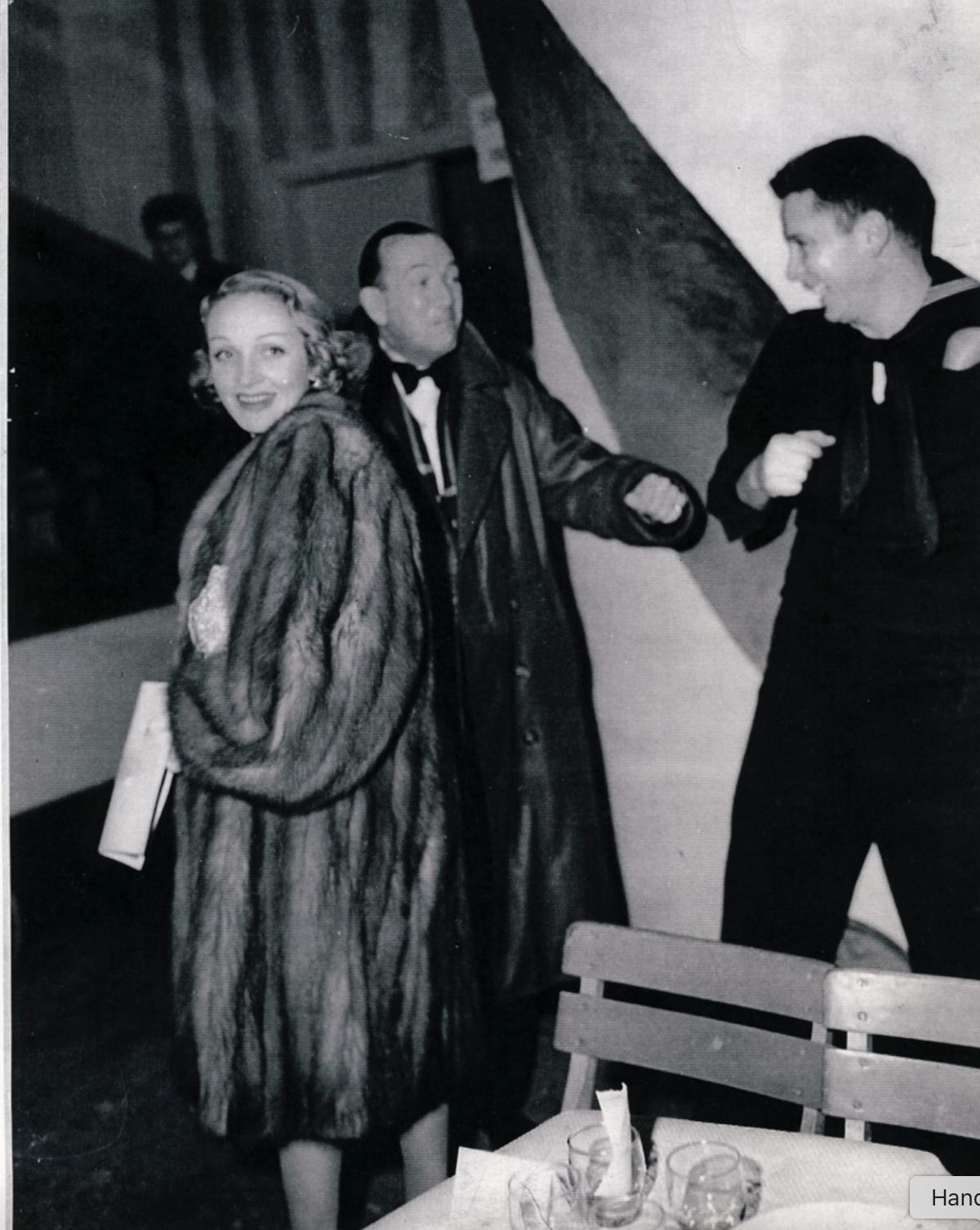
In Paris, just after the war and while still in the Navy, he drew caricatures of stars at events for fun. In the photo above, Noël Coward takes a faux swing at my father for a Life magazine photographer as Marlene Dietrich looks on after he showed them his caricature of them in 1946.
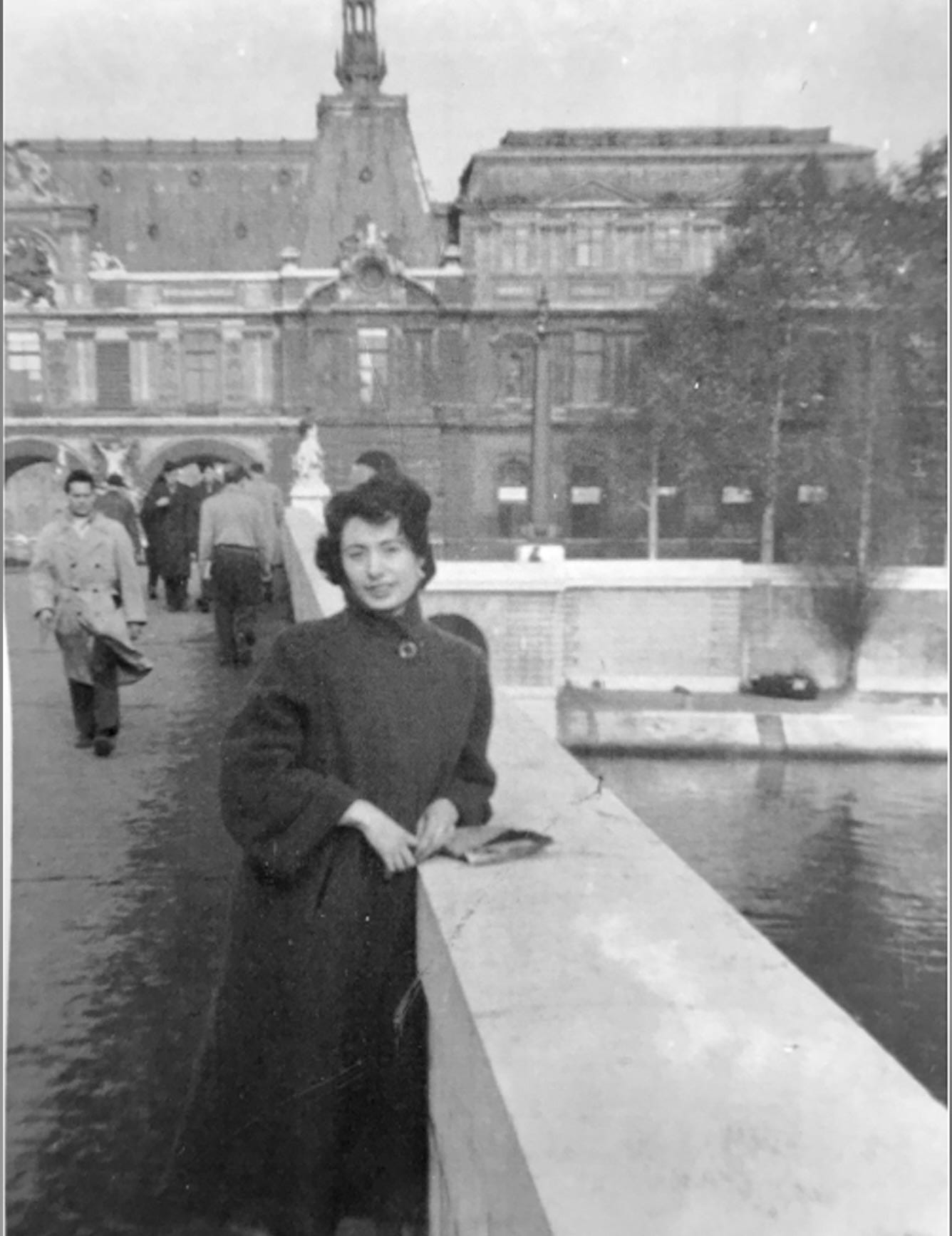
My mother, Bernice, was 10 years younger than my father and an aspiring artist who was up for adventure. They had met while working at Columbia Pictures in New York. After the war, he returned to illustrating posters of stars put up outside theaters where the studio’s films were being shown. At the time, she was a model and the art department’s “photostat girl.” [Photo above of my mother in Paris in 1955 at Pont du Carrousel (Carrousel Bridge), with her back to the Louvre]
My parents left for Paris in 1952 and returned to the U.S. in 1956. My mother wanted me to be born in New York. Homesick for France, she stuck a “C” on the end of my name after I was born rather than the traditional “K.” I was a souvenir of sorts.
The covers of the French LPs they brought home were glossy—the male singers were ruggedly handsome and the women splendidly dressed and impeccably made up. The female singers seemed to crawl inside songs to express enormous joy, deep pain or regret. As with all things French, their interpretations were deeply personal, as if whatever they were singing about happened to them hours earlier.
My mother often reserved these records for her hours spent writing and illustrating children’s books, probably wishing she was still in Paris at a cafe with my father. In my adolescence, I couldn’t understand a word of what Edith Piaf, Patachou, Yves Montand, Maurice Chevalier, Line Renaud, Charles Aznavour, Cora Vaucaire, Catherine Sauvage or others were singing, but those records taught me to feel music and art in general.
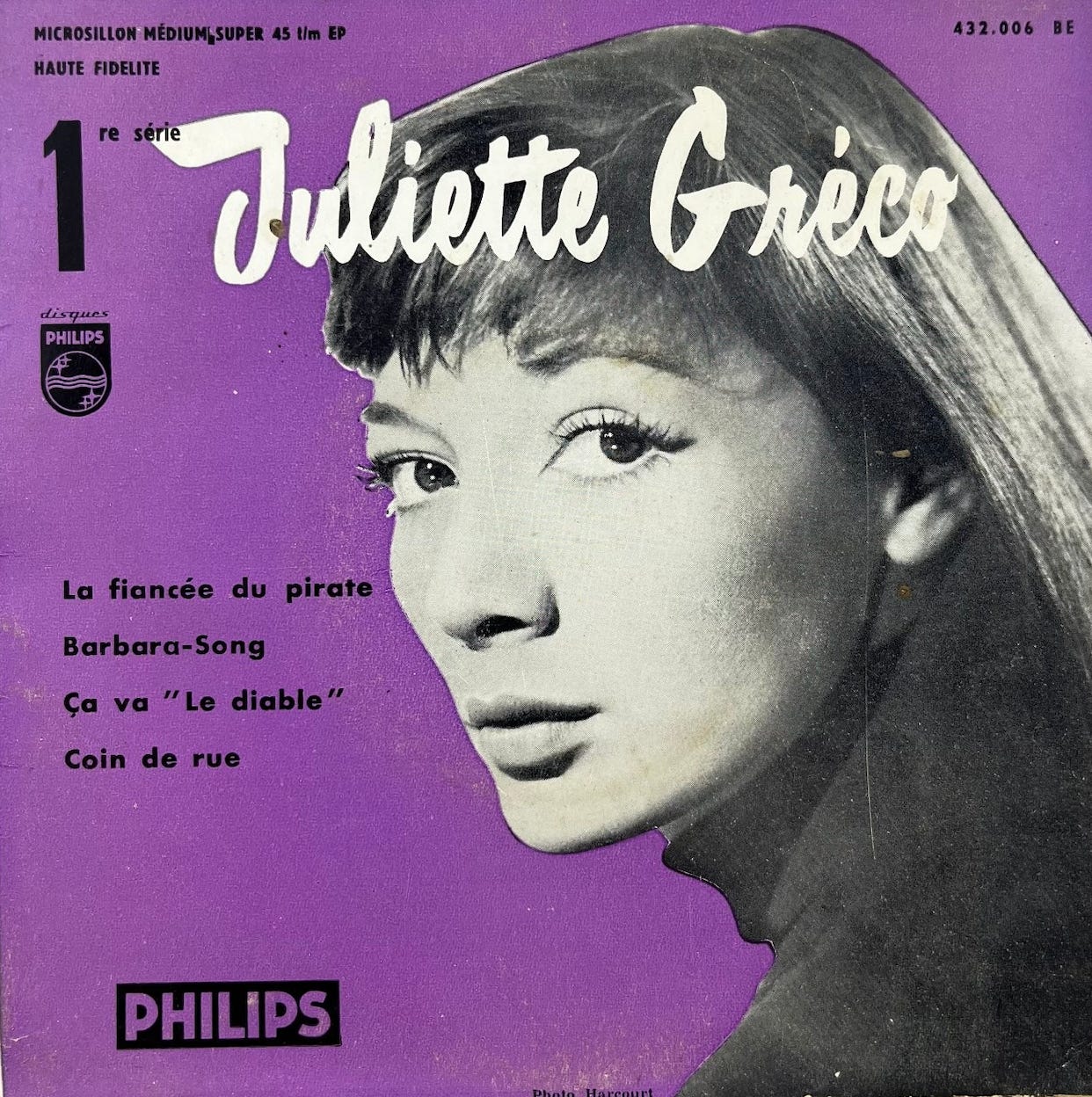
Juliette Gréco was my favorite, and the finest. She was less about pop, though some of her recordings had a pop orchestration. Instead, there was a quality about her husky voice that compelled me to take notice. She seemed to be imparting a life lesson learned from a past event. She could be serious or wistful, dismissing bad luck with a shrug and treating it as a passing cloud. I miss Paris most when I listen to her records.
Gréco was born in Montpellier, France, in 1927, and endured a harsh childhood. Her mother lacked warmth toward her, largely because Gréco was unwanted, telling her she was the product of a rape, a fabrication. During World War II, the family moved to southwest France and became active in the Resistance. Her mother was arrested by the Gestapo in 1943, prompting Gréco and her older sister to return to Paris. En route, they, too, were arrested, tortured and imprisoned just south of Paris. Her mother and sister were subsequently were sent to the Ravensbrück concentration camp. Gréco remained in prison until the end of the war.
Upon her release, she walked the eight miles to Paris to retrieve her belongings from what had been Gestapo headquarters. Her mother moved to Indochina, leaving Gréco and her sister behind. Gréco gravitated to the emerging bohemian scene on the Left Bank and studied acting with Solange Sicard and befriended intellectuals such as Jean-Paul Sartre, who said she had “millions of poems in her head.”
Her cabaret career began in 1949, and she befriended Albert Camus, Jacques Prévert and Boris Vian, resulting in her nickname, “La Muse de L’Existentialisme” (the Muse of Existentialism). Eventually, she was introduced to director Jean Cocteau and cast in one of his films, Orphée (1950). By then, Gréco had already been cast in films, starting in 1947 (her first was Louis Daquin’s The Bouquinquant Brothers). Her first 78 was released in 1950—Si tu t’imagines.
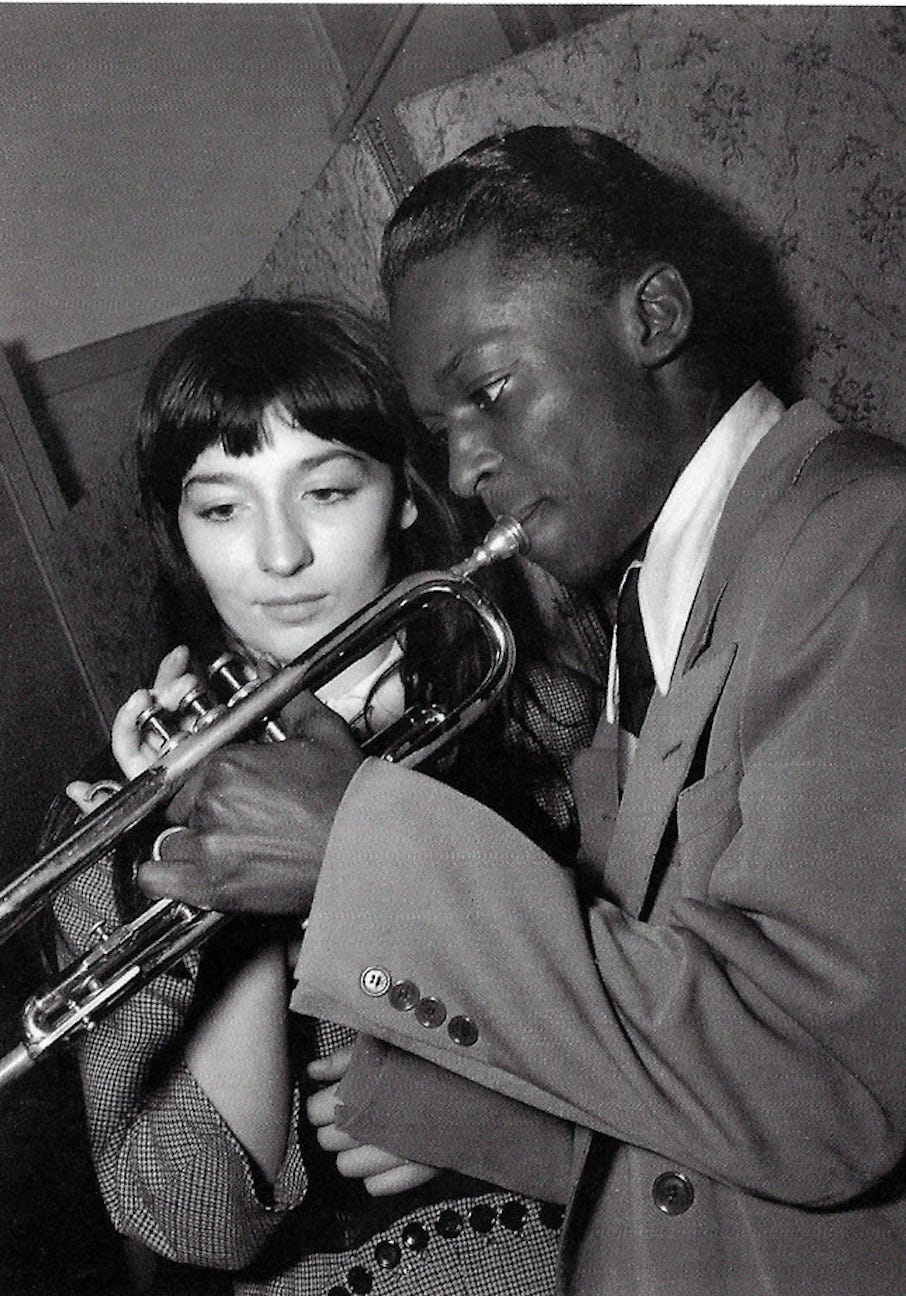
In addition to her relationship with Miles Davis in 1949, she had affairs with Albert Camus, French singer Sacha Distel, Hollywood producer Darryl F. Zanuck, and Quincy Jones, when he was in Paris in the late 1950s. The Beatles were also smitten by her in the early 1960s, and Paul McCartney has said that his song, Michelle, was inspired by her. [Photo above of Gréco and Miles Davis by Jean-Philippe Charbonnie]
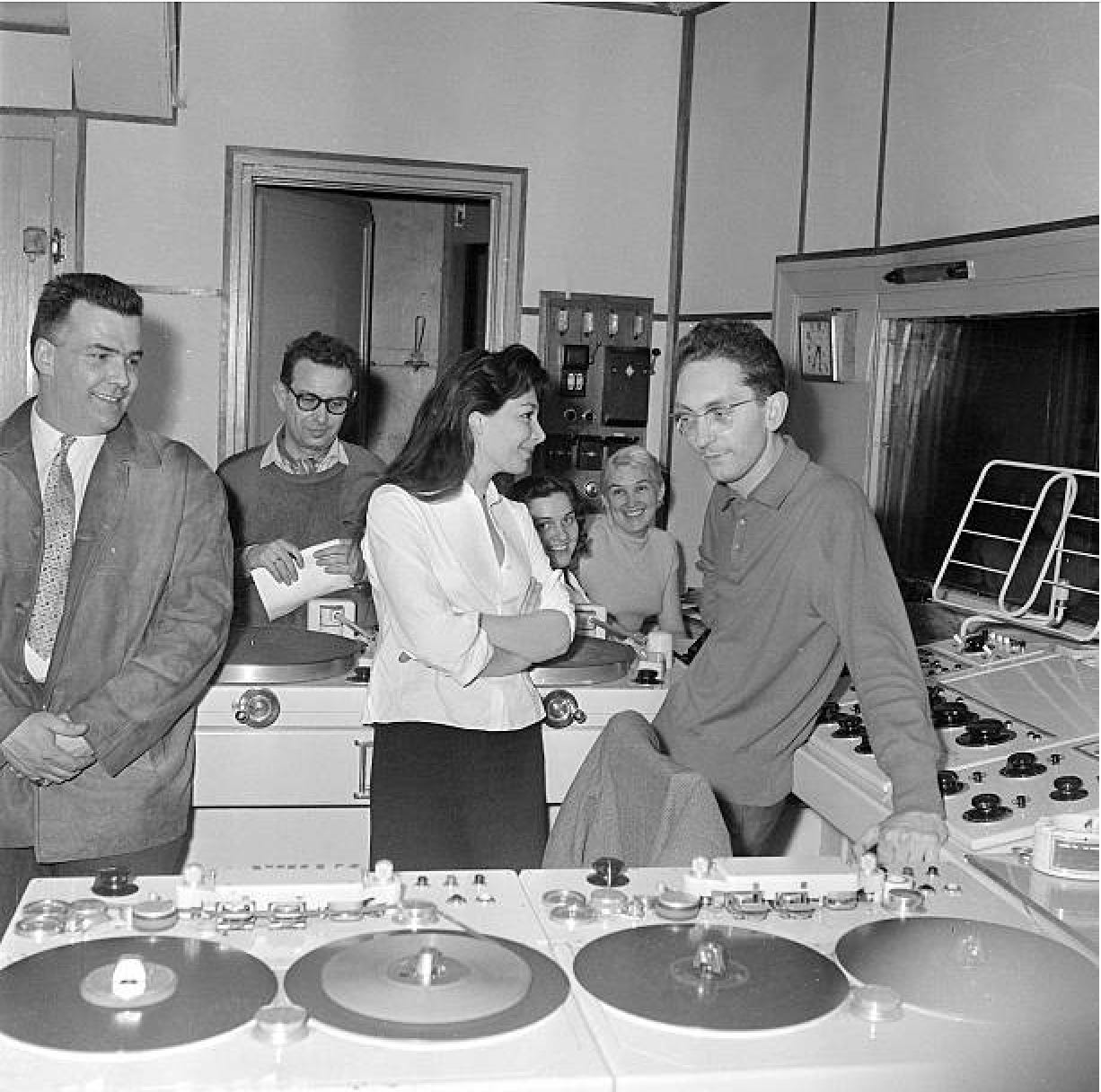
It’s gratifying to pull Gréco loose from Miles Davis’s shadow and shed light on what made her so special and heroic to the people of France. [Photo above of Gréco in the studio with Andre Popp in the late 1950s or early 1960s, courtesy of Ebay]
Gréco died in 2020 at age 93. Let’s give a look and listen:
Here’s a short documentary on Gréco and Miles Davis..
Here’s the trailer for Orphée (1950); you’ll see Gréco at 2:40…
Here’s Gréco singing Si tu t’imagine (1950)…
Here’s Gréco in the early 1960s singing Sous le ciel de Paris, her 1951 recording. Her rendition is credited for popularizing the song worldwide…
Here’s Gréco singing with the Andre Popp Orchestra in the late 1950s; she recorded several albums with Popp…
Here’s Gréco singing La Mer in 1963, (which became Beyond the Sea with English lyrics by Jack Lawrence)…
Here’s an hour of Gréco in concert in Tokyo in 1961. Her intimacy and grace were unrivaled...
And here’s Gréco on a French TV talk show in 1990 being surprised by guest Miles Davis, less than a year before his death…
Thanks so much for the wonderful coverage of Juliette Gréco’s career,
Marc. Christian says it all
in his gratitude to you for
posting the wealth of information both about her
and by her.
What a wonderful piece about Juliette Gréco AND about your parents! Now we all know why Marc is spelled with a 'C' and not a 'K' 🙂. I have always followed Juliette Gréco's career and even saw her in concert three times. The last time right here in Berlin in November 2015. One of my favorite French male singers is Gilbert Bécaud, who lived from 1927 to 2001. I have also great concert memories of him from November 1987 and Mai 2000.